Patient Attraction & Retention: Luxury Content That Builds Long-Term Loyalty
Your Clinical Results Do Not Determine Patient Loyalty. Your Content Does. The most dangerous assumption in aesthetic medicine is that an exceptional treatment result is enough to make a patient come back. It is not. And the data is beginning to prove it at scale. In a US med spa market valued at $23–$26 billion in 2026, the average aesthetic patient has more options within driving distance — and within a single Instagram scroll — than at any point in the history of the industry. She is not disloyal by nature. She is overstimulated by choice. And in that environment, the practices that retain high-value patients long-term are not simply the ones delivering the best results. They are the ones delivering the most compelling, most consistent, most emotionally resonant experience — before the appointment, between appointments, and long after the treatment has worn off. That experience, in 2026, is built almost entirely through content. This is the strategic reality that separates aesthetic practices with a thriving, loyal patient base from those locked in an exhausting and expensive cycle of constant new patient acquisition. Patient attraction and retention are no longer separate functions with separate budgets. They are a single, continuous content-driven relationship — and the clinics that understand this are building something their competitors cannot buy their way into. Compliance note: All patient-facing content must adhere to FDA guidelines on medical advertising and FTC regulations on truthful claims and endorsements. Outcome-specific language must include appropriate disclaimers. “Individual results may vary” is required wherever treatment results are referenced or implied. The Retention Problem Nobody Is Talking About Honestly The aesthetics industry spends an enormous amount of energy discussing patient acquisition — ad spend, SEO rankings, social media growth. It spends far less time confronting a quieter, more corrosive problem: the patients it is already losing. No-show and cancellation rates in med spas currently run between 17–22% industry-wide, with the average missed appointment costing a practice $200–$500 in lost revenue per slot. For a mid-volume clinic, that translates to $1,200–$7,500 in monthly losses — and over $134,000 annually when compounded across a full year. These are not edge cases. They are systemic revenue leaks hiding in plain sight on every appointment calendar. But behind those numbers is a more telling insight: a significant proportion of no-shows and cancellations are not logistical failures. They are relationship failures. The patient who cancels without rescheduling is often the patient who has not heard from your practice since her last appointment — no educational content that renewed her interest in treatment, no touchpoint that reminded her why she chose you, no narrative that made her feel connected to your brand between visits. Content is the connective tissue between appointments. And in its absence, even the most satisfied patient is quietly susceptible to the next beautiful Instagram ad that appears in her feed. The Mistakes That Turn Retention Problems Into Revenue Crises Most practices do not lose patients dramatically. They lose them quietly — one unremarkable interaction at a time. Treating the first appointment as the finish line. A successful treatment opens a relationship, it does not close one. A patient who receives no meaningful communication between visits has no particular reason to return to you over the competitor whose content she has been consuming for three months. The window between appointments is your most important retention opportunity — and most practices leave it empty. Inconsistent brand communication. A luxury in-clinic experience paired with generic digital content creates a dissonance high-value patients feel, even if they cannot name it. Brand consistency across every touchpoint is not a marketing nicety. It is a retention mechanism. Ignoring the no-show haemorrhage. At 17–22% no-show rates and $200–$500 lost per missed appointment, practices without an active reminder and reactivation strategy are absorbing up to $7,500 monthly in entirely preventable losses. Appointment reminders alone reduce no-show rates by 40–50%. The math is not complicated — the inaction is. (For practices ready to close this gap, SpotFill was built precisely for this.) Content optimized for reach, not retention. A Reel with 10,000 views from people who will never book is not an asset. Luxury content is not built for audiences. It is built for the specific patient already in your ecosystem — deepening her trust and making the decision to rebook feel inevitable. Neglecting compliance until it becomes a crisis. FDA and FTC scrutiny of aesthetic claims has intensified in 2026. Unsubstantiated efficacy claims, undisclosed influencer partnerships, and before-and-after content without proper disclaimers are not minor oversights — they are brand liabilities that one enforcement action can make catastrophically expensive. Compliance note: Before-and-after content requires clear disclaimers. Influencer partnerships must disclose material connections per FTC guidelines. Absolute outcome language is non-compliant. What Luxury Content Actually Does for Patient Retention There is a meaningful difference between content that markets and content that builds. Most aesthetic practices produce the former — promotional announcements, treatment highlights, before-and-after imagery — without investing in the latter. Both have value. But only one creates the kind of patient loyalty that compounds over time. Luxury content, in the way Luxe Digital Collective defines it, operates on three levels simultaneously. It educates with authority. A patient who understands why she needs a touch-up at four months rather than six, or why combining Botox with a skin resurfacing protocol produces meaningfully better results, is not just more informed. She is more likely to rebook proactively, more likely to add treatments, and more likely to refer. Clinical education delivered through elegant, accessible content transforms a passive patient into an engaged participant in her own aesthetic journey — and that engagement is the foundation of long-term retention. It reinforces the premium experience. Every piece of content your practice publishes is either elevating or eroding the perception of your brand. A hastily written email blast, a stock-photo social post, a generic blog that reads like it was assembled from a template — these are not neutral. They actively undermine the premium positioning you have
TikTok and Facebook Stories for Med Spas: How to Boost Bookings Without Extra Work in 2026
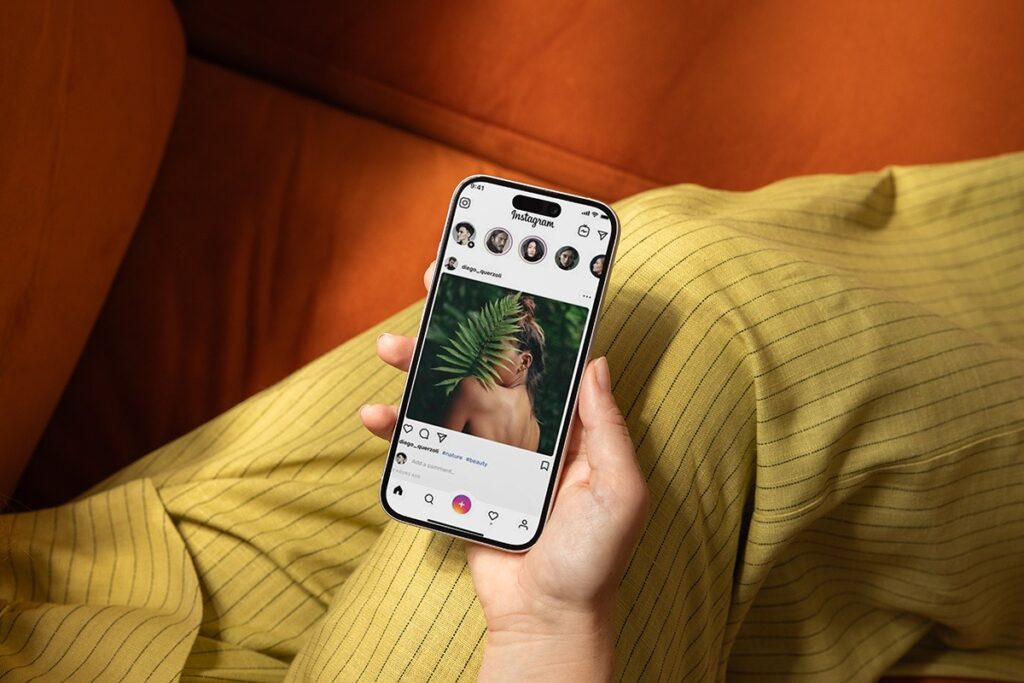
Why the Busiest Med Spa Owners Are Turning to Stories to Fill Appointments — And How You Can Too Modern med spa reception area with curved marble desk, moss wall, and natural light. TikTok and Facebook Stories for med spas are rewriting the rules of appointment recovery in 2026 — and if you’re not using them yet, you’re leaving a significant amount of revenue on the table every single week. Let’s start with the scale of what we’re actually talking about here. TikTok crossed 1.5 billion active users globally in 2024 and shows no signs of slowing down. Instagram — home of Stories — sits at over 2 billion monthly active users worldwide. Facebook, often written off as yesterday’s platform, still commands over 3 billion monthly active users, making it the single largest social network on the planet. But raw user numbers aren’t the real story. The real story is engagement. TikTok users spend an average of 95 minutes per day on the platform — more time than any other social app. Instagram Stories alone generate over 500 million daily active users, with one in three of the most viewed Stories coming from business accounts. And Facebook Stories reach over 300 million people every single day. Here’s why that matters for a med spa owner specifically. Your clients — the women aged 28 to 55 who make up the overwhelming majority of aesthetic treatment bookings — are not passively scrolling these platforms. They’re actively engaged, daily, on all three. They’re watching Stories during their lunch break. They’re on TikTok before bed. They’re checking Facebook between school pickups. The audience you need to reach when a same-day slot opens up isn’t sitting by their phone waiting for a text from your front desk. They’re already on social media — right now — and a well-timed Story is the most direct path from your open slot to their attention. Why Do Med Spas Struggle to Fill Last-Minute Cancellations? Before getting into the solution, it’s worth being honest about the problem — because most practice owners know cancellations are expensive without fully appreciating just how expensive. Med spa professional calculating lost revenue from cancellations on a calculator. No-show and last-minute cancellation rates across the aesthetic clinic sector currently run between 17 and 22 percent of total appointments. Each missed slot represents $200 to $500 in unrecovered revenue, depending on the treatment. Add that up across a month, and most mid-sized practices are absorbing $1,200 to $7,500 in unfilled appointment value — and more than $134,000 annually for many owners in the $1M to $3M revenue range. The traditional response to a same-day cancellation goes something like this: someone at the front desk notices the gap in the schedule, squeezes a few calls in between other tasks, sends a text to whoever comes to mind, and crosses their fingers. It’s the kind of effort that feels productive in the moment — but the results tell a different story. Most of those slots stay empty. Not because the clients aren’t out there — but because last-minute manual outreach through traditional channels is a bit like shouting into a crowded room and hoping the right person hears you. The odds simply aren’t in your favor. Appointment reminders do help — research consistently shows they reduce no-show rates by 40 to 50 percent when properly implemented. But reminders address future appointments. They do absolutely nothing for the slot that just opened up at 11 AM today. That’s a different problem requiring a completely different solution. Are TikTok and Instagram Good for Business Marketing? Short answer: yes. Longer answer: they’re arguably the most powerful organic marketing tools available to a small or mid-sized business in 2026 — particularly for a visually driven, relationship-based industry like aesthetic medicine. Hand holding iPhone displaying an Instagram feed against an orange background. Here’s what makes them uniquely suited for med spa marketing and aesthetic clinic social media specifically: Visual storytelling is the product. Aesthetic results are inherently visual. Before-and-after transformations, treatment walkthroughs, behind-the-scenes clinic content — all of it performs naturally on platforms built around visual content. A med spa has a significant content advantage over most other small businesses simply by virtue of what the work looks like. Trust is built through consistency. TikTok and Instagram both reward accounts that show up consistently with authentic content rather than overly produced promotional material. Regular Stories, treatment clips, and educational content build the kind of ongoing brand familiarity that makes a client choose your practice over the one down the street — even if they’ve never been in for a consultation. The algorithm works in your favor. Both TikTok and Instagram actively distribute content to users who aren’t yet following an account — through TikTok’s For You Page and Instagram’s Explore and Reels features. This means every piece of content has the potential to reach new clients, not just existing followers. For a local med spa, this organic reach to a geographically relevant audience is genuinely valuable in a way that most traditional marketing channels can’t replicate. Stories specifically drive immediate action. Unlike feed posts — which sit passively and accumulate engagement over time — Stories disappear in 24 hours. That disappearing mechanic creates authentic urgency that drives immediate action. For last-minute appointment availability, that urgency is almost perfectly aligned with the actual time sensitivity of the situation. Short-form content on stories and reels may generate two to three times the engagement of SMS and email in the aesthetic and wellness category — a performance gap that translates directly into fill rate difference. How Do You Use TikTok for a Med Spa? This is one of the most commonly asked questions from practice owners who know TikTok is relevant but aren’t sure where to start — and the honest answer is that it’s significantly more accessible than most people expect. Content creator recording a video on a phone mounted to a tripod in a bright living room. TikTok for med spas works
How to Fill Last-Minute Cancellations at Your Med Spa — And Recover $134,000 in Lost Revenue
The Instagram Stories Strategy That’s Helping Aesthetic Practices Turn Empty Slots Into Booked Appointments in 2026 If you own a med spa in 2026, you already know the feeling. A cancellation hits your booking system before 9 AM. Then another. By midmorning, you’re looking at two or three empty slots in a schedule that was full yesterday — and the manual scramble to fill last-minute cancellations at your med spa begins all over again. It’s not a rare bad day. It’s a systemic revenue problem. No-show and cancellation rates across the aesthetic clinic sector currently run between 17 and 22 percent of total appointments. At $200 to $500 per missed slot, that translates to $4,000 to $8,000 in unrecovered monthly revenue for most mid-sized practices — and more than $134,000 in annual losses for many. In a U.S. med spa market valued at $23 to $26 billion in 2026, that’s not an acceptable margin of loss. It’s a fixable operational gap. The fix — the one that’s actually working, with fill rates of 35 to 50 percent versus the 4 to 5 percent average for SMS and email — isn’t another reminder system. It’s Instagram Stories. And the practices recovering the most revenue from cancellations right now are the ones who figured that out first. Here’s exactly how it works — and how to implement it in your practice starting today. What Are No-Shows Really Costing Your Med Spa in 2026? Let’s start with the data, because the data is what makes this conversation impossible to defer. No-show and last-minute cancellation rates across the med spa and aesthetic clinic sector currently run more than 20 percent of total appointments. In a practice with a full schedule, that’s nearly one in five appointment slots evaporating — every week, every month, compounding across the year. The per-appointment cost of a missed slot ranges from $200 to $500 depending on the treatment. A missed Botox appointment looks different from a missed CO2 laser session, but neither is free. When you aggregate those losses across a month, most practice owners in the $1M to $3M revenue range are absorbing $4,000 to $8,000 in unfilled appointment value monthly. Annually, that number climbs past $134,000 for many mid-sized practices. Here’s the context that makes that figure land differently: the U.S. medical spa market is valued at around $25 billion in 2026, growing at a pace that suggests enormous opportunity — but only for practices that can actually capture the demand sitting in front of them. A practice losing $134,000 annually to cancellations isn’t just losing revenue. It’s losing market position in one of the fastest-growing sectors in healthcare and wellness. The question isn’t whether this problem deserves a serious solution. It’s why so many practices are still responding to a 2026 problem with 2018 tools. Why Aren’t SMS and Email Reminders Enough Anymore? The standard playbook for cancellation management has been automated reminders — text messages sent 24 or 48 hours before appointments, with email follow-up as the secondary touchpoint. Reminder systems do work, and the data supports their value: appointment reminders reduce no-show rates by 40 to 50 percent when implemented consistently. But here’s the gap that the reminder conversation misses entirely: reminders address future appointments. They do nothing for the slot that just opened up at 2 PM today because a client cancelled this morning. That’s a fundamentally different problem — and it requires a fundamentally different solution. When a cancellation happens, a practice has a narrow window of opportunity to fill that slot before it becomes irretrievable lost revenue. Most practices respond with a manual process: a front desk team member searches a waiting list, makes a few calls, sends a text to a handful of clients, and hopes someone is available and interested on short notice. The conversion rate on that approach — manual outreach following a cancellation — averages 4 to 5 percent. Meaning for every 20 cancellations a practice tries to fill through traditional methods, roughly one gets recovered. That’s not a strategy. That’s hoping. The Channel That’s Actually Moving the Needle: Instagram Stories While practices have been focused on SMS open rates and email click-throughs, the data on social media engagement — Instagram Stories specifically — tells a dramatically different story. Stories-based content generates two to three times the engagement of traditional SMS and email marketing in the aesthetic and wellness category. The reason is behavioral: Instagram Stories occupy a full-screen, immersive format that commands attention in a way that a text notification in a crowded inbox simply doesn’t. For a demographic that spends meaningful time on Instagram daily — which describes the vast majority of med spa clients — a Story from a practice they follow lands differently than a text from a number they’ve half-forgotten. More importantly for cancellation recovery specifically, Stories carry a built-in urgency mechanism that no other channel replicates as naturally. The 24-hour disappearing format — the same feature that makes Stories feel casual and low-stakes for personal content — makes limited-availability treatment offers feel genuinely time-sensitive in a professional context. “This afternoon only. One opening. Tap to book.” That message, in a well-branded Story format, converts at rates that traditional outreach simply doesn’t approach. Practices using Story-based cancellation outreach are reporting fill rates of 35 to 50 percent on last-minute openings — compared to the 4 to 5 percent average for manual SMS and email outreach. That gap isn’t marginal. It’s transformational for a practice’s monthly revenue picture. Who Has Time to Design a Branded Story at 10 AM? Here’s where the conversation gets real for most practice owners. You understand that Instagram Stories work. You’ve probably tried posting manually when a cancellation opens up — a quick photo, some text, a booking link. And you’ve seen it work, at least sometimes. The problem isn’t the concept. The problem is the execution at scale, under the time pressure that cancellation recovery actually involves. Creating a properly branded, visually polished Story — one