



The Best Cancellation Recovery System Is the One That Works While You Are Still in a Treatment Room.
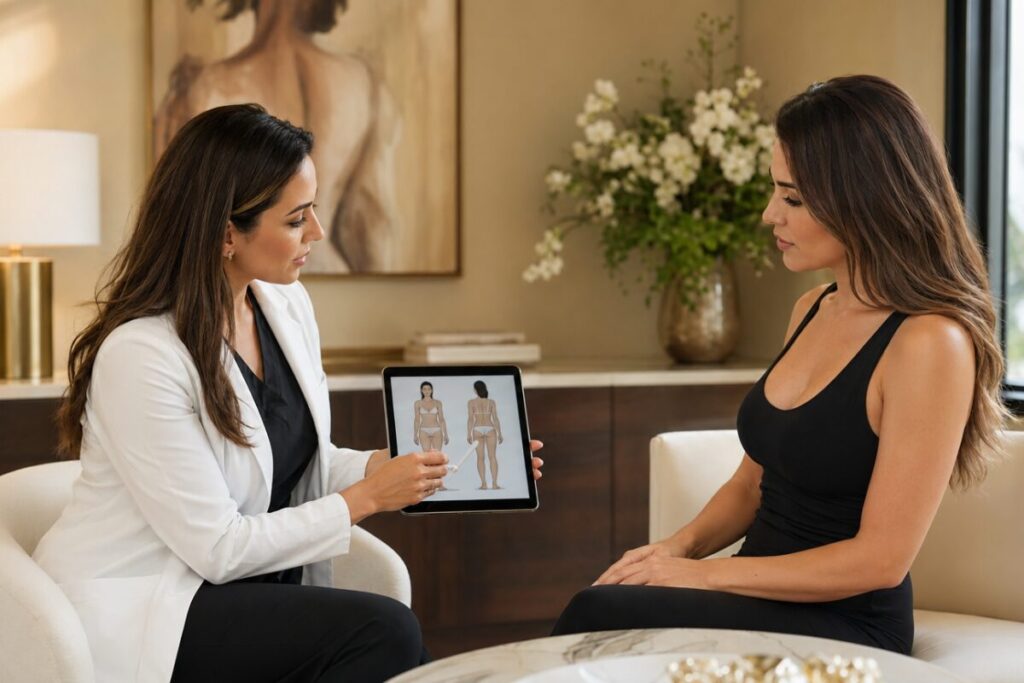
A cosmetic surgeon explaining the treatment to a client with a visual of fat deposits on a tablet
The medical aesthetics industry has a revenue leak that most owners are not tracking closely enough because it does not look like a marketing problem. It looks like a scheduling problem. And scheduling problems feel like they are just part of running a practice.
They are not. No-shows and last-minute cancellations cost U.S. med spas more than $100,000 annually at many mid-to-high volume practices, not from weak demand or poor marketing, but from appointments that were already confirmed and simply never showed up. At $200 to $500 per missed slot, that loss compounds quietly and quickly.
The conventional response, a frantic group text, a last-minute email blast, a rushed graphic thrown together in Canva, recovers almost nothing. Industry data puts response rates on those channels below five percent. Yet a growing number of high-performing med spa owners are closing that gap in under 60 seconds, without a designer, without a marketing team, and without stepping away from a single client interaction.
The tool making that possible is automated, branded Stories, professionally designed, compliance-ready, and posted before the financial impact of a cancellation has time to register. Here is why the no-show problem is worse than your numbers suggest, what the most effective recovery strategies look like in 2026, and why Instagram and Facebook Stories are outperforming every traditional retention channel by a factor of two to three.
The No-Show Problem Is Costing More Than Most Practices Realize
The numbers are worth sitting with. No-show and last-minute cancellation rates across the medical aesthetics industry are sitting at nearly 22 percent in 2026, based on industry benchmarking data across booking platforms. For a practice running eight to twelve appointments a day, that is nearly one in five slots going unfilled. When you factor in average service prices across Botox, filler, laser treatments, and HydraFacials, those empty chairs translate to $200 to $500 lost per missed appointment.
Run those numbers monthly, and the estimated range is $1,200 to $7,500 in unrecovered revenue every month. Annually, industry estimates put that figure close to $135,000 for mid-to-high volume practices. That is not a rounding error. That is a full-time salary, a new device, or the marketing budget you keep wishing you had.
The U.S. medical spa market is not slowing down. Valued at an estimated $23 to $26 billion in 2026, competition for clients is sharper than it has ever been. The practices pulling ahead are not always the ones with the most skilled injectors. They are the ones with the smartest systems.

Frustrated med spa receptionist dealing with last-minute client no-shows and empty appointment slots.
How to Reduce Patient Cancellations Before They Happen
Before addressing how to fill slots that go empty, it is worth covering how to reduce cancellations in the first place. Prevention is always less expensive than recovery.
Build A Confirmation And Reminder Sequence That Actually Works.
The research on this is consistent: automated appointment reminders can reduce no-show rates by 40 to 50 percent, based on findings across healthcare and aesthetic practice management studies. Yet most med spas are still relying on a single confirmation email sent at the time of booking, which clients forget about within 48 hours.
An effective reminder sequence looks like this: 72 hours before the appointment, send a confirmation text with appointment details and a one-tap reschedule link. 24 hours before, send a reminder with what to expect, any prep instructions, and a soft cancellation window. Two to four hours before, send a final reminder with your address, parking info, and a warm tone that reinforces the appointment. This sequence alone can cut no-show rates nearly in half. When clients feel informed and prepared, they show up.
Five Practical Ways To Reduce No-Shows:
Require a deposit or a card on file. Even a $25 to $50 deposit significantly increases show rates. Clients with something at stake cancel less, and when they do cancel, you keep the deposit.
Make rescheduling easy. Giving clients a frictionless way to reschedule actually reduces outright no-shows. When rescheduling feels difficult, clients ghost instead of communicating.
Write a clear cancellation policy and enforce it consistently. Post it on your booking page, in your confirmation email, and in your intake forms. Inconsistent enforcement signals the policy does not matter.
Send personalized reminders rather than generic messages. Use the client’s name, the specific service they booked, and their provider’s name. Personal messages get read. Generic messages get ignored.
Follow up after a no-show without shaming. A warm “We missed you, would you like to reschedule?” message sent within an hour of a missed appointment recovers a surprising number of bookings. Make it easy, not awkward.A warm “We missed you — would you like to reschedule?” message sent within an hour of a missed appointment recovers a surprising number of bookings. Make it easy, not awkward.
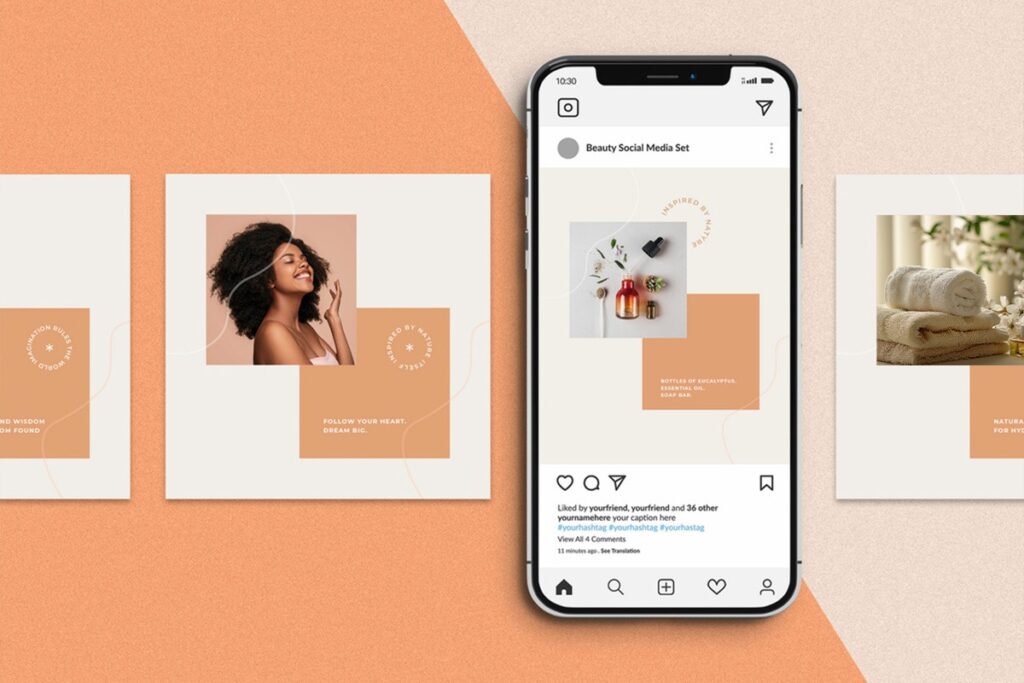
Beauty brand social media post templates used to automate client engagement and fill open bookings.
Why Instagram and Facebook Stories Outperform SMS and Email for Recovery
Even with the best reminder system in place, cancellations happen. And when they do, the question shifts from prevention to recovery. This is where automated branded Stories become the most effective tool that most practices are not using.
Most med spas default to a mass text or email blast when a slot opens up. It feels logical. But the numbers do not support it.
SMS and email open rates for last-minute promotional messages sit around four to five percent. Instagram and Facebook Stories, by contrast, generate two to three times higher engagement than static feed posts and traditional digital outreach, based on platform engagement data. Stories feel native, urgent, and personal. They appear at the top of the feed. They disappear in 24 hours, which creates natural scarcity without any manufactured urgency.
When someone sees a Story that says “We just had a cancellation, Tuesday at 2 PM is open for a Sculptra session, book now via the link in bio,” it does not feel like a promotional email. It feels like an inside tip from someone they follow and trust. That distinction is what drives the conversion difference.
The Meta Business Help Center provides guidance on how Stories reach and engagement work across both Instagram and Facebook, which is useful context for practices building a recovery posting strategy.
What Makes a Branded Story Convert
Not all Stories are equally effective. The ones that fill slots fastest share a few consistent characteristics.
- Professional branding matters more than most owners expect.
- Clear details remove friction.
- A single, clear call to action outperforms options.
- Compliant copy is non-negotiable.
Automated Branded Stories: The Zero-Design Solution for Busy Owners
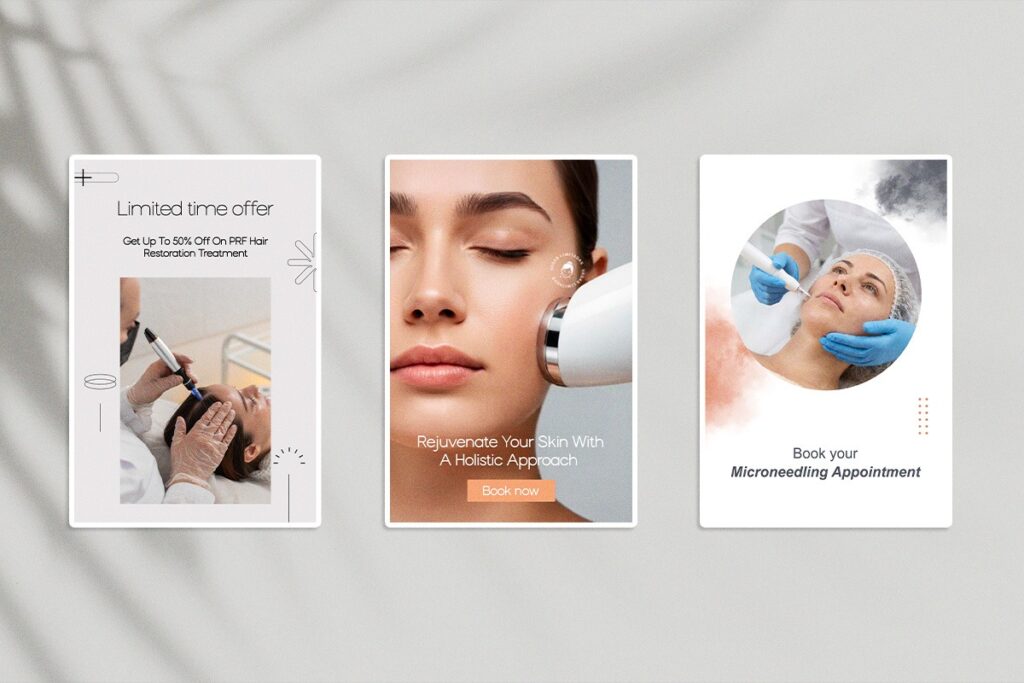
Branded med spa promotional stories showing treatment offers designed to drive instant rebookings.
Here is the practical problem most owners face. You know social media works. You know, stories convert. But you do not have a graphic designer on staff, you do not have 45 minutes to open Canva every time a client cancels, and design is not why you built a med spa practice.
This is the gap SpotFill was built to close.
When a cancellation hits your booking system, whether you run Mindbody, Square, Vagaro, or another platform, SpotFill detects it automatically. Within 60 seconds, it generates two professionally branded Story slides and delivers them directly to your phone and email, ready to post. No design work. No scrambling. No missed window.
Med spa owners using SpotFill report slot fill rates of up to 35 to 50 percent on recovered cancellation slots, compared to the four to five percent typically seen with last-minute SMS blasts. Results vary based on audience size, posting frequency, and service type, but the directional shift is consistent: Stories fill slots faster than any other recovery channel currently available.
A Note on FDA and FTC Compliance in Med Spa Marketing
As aesthetic marketing has become more sophisticated, regulatory scrutiny has increased proportionally. In 2026, both the FDA and the FTC will sharpen their focus on health and wellness claims in the medical spa space specifically.
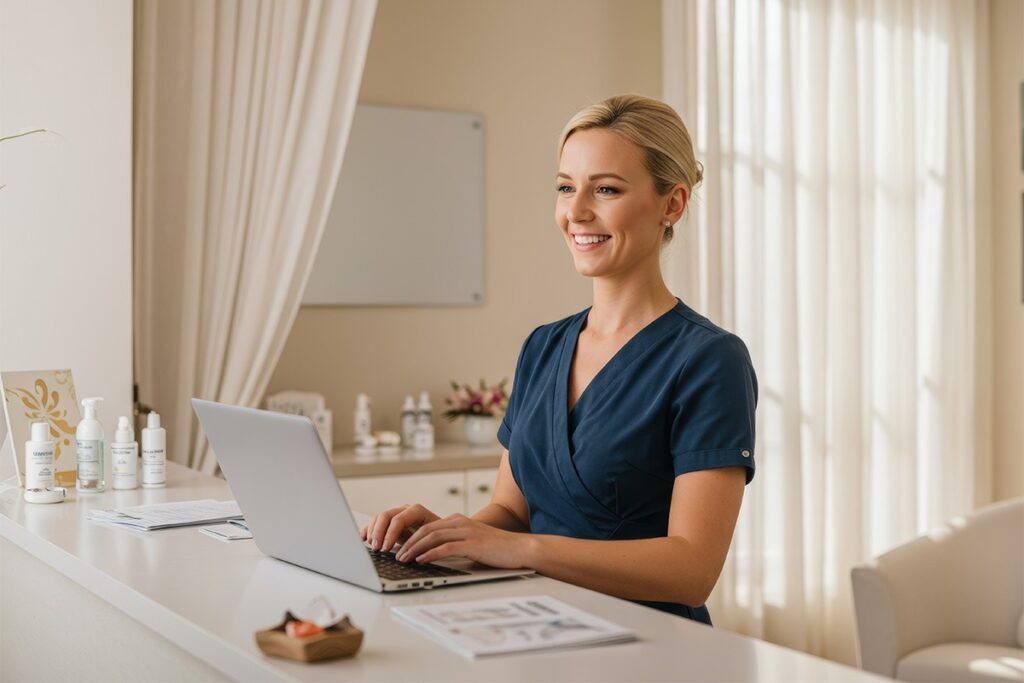
Med spa receptionist managing online bookings at the front desk using automated scheduling software.
The core requirements are consistent regardless of channel:
SpotFill’s pre-built captions are written with these guidelines in mind, giving practices compliant, professionally worded copy for every Story without requiring a legal review on every post.
Disclaimer: This blog is for informational purposes only and does not constitute legal or regulatory advice. For compliance guidance specific to your practice, consult a qualified healthcare attorney or compliance specialist.