



The Smartest Med Spa Owners Are Ditching Mass Texts — and Filling Slots With Stories Instead
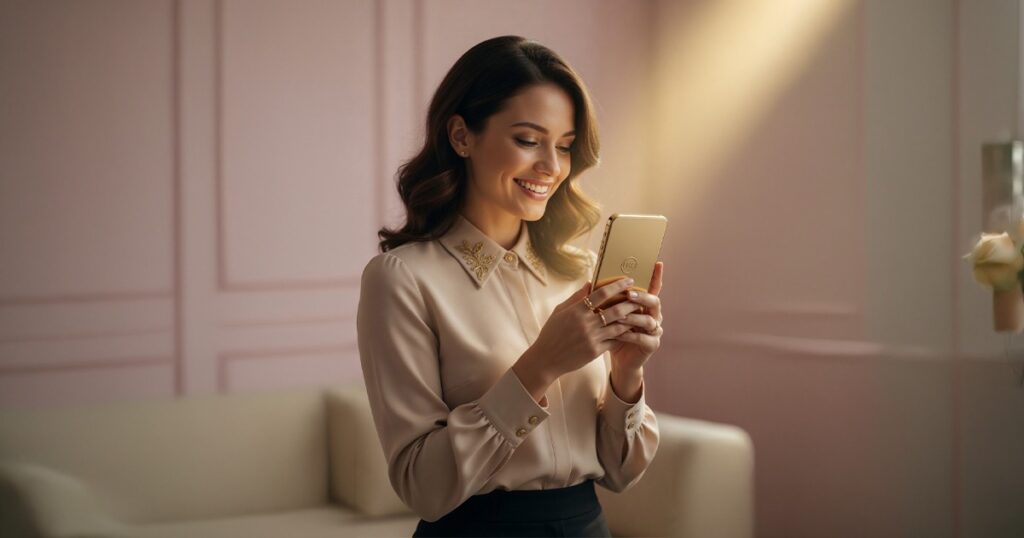
Smiling woman holding a smartphone, looking at her phone screen.
In a 2025 report by CNBC, it was stated that Instagram has 3 billion active users. We can imagine that the number has only grown since then. But what does that mean for med spas? Yeah, you guessed it — it is the best place to showcase, advertise, and sell your treatments. That is not all. One of the most popular 2026 med spa trends is using stories for follow-ups and turning no-shows into spots filled, sometimes within minutes. Stories are quickly outperforming traditional follow-up methods and reminders across the board. So why are Stories doing so well? Let us find out.
Are Instagram Stories Good for Business?
Short answer: absolutely. Long answer: they are arguably the single most underutilized revenue tool sitting right inside your phone — and what is wild is that most med spa owners have never once considered tapping into it, at least, not in the best way.
Stories generate two to three times the engagement of standard feed posts. They sit at the very top of the app, above the algorithm-controlled feed, above ads, above everything. The moment a follower opens Instagram, your story is the first thing they see — full screen, no competition, no distractions. For a med spa trying to fill a last-minute cancellation or promote a same-day opening, that kind of front-row visibility is worth more than any email campaign you could send.
In 2026, with the US med spa market valued at $23–$26 billion and competition growing in virtually every market, the businesses winning the attention game are the ones showing up consistently where their clients already are. And their clients are on Instagram — three billion of them, and counting.
But Stories are not just good for visibility. They are good for trust. Every Story you post — whether it is a behind-the-scenes clip, a treatment result, or a same-day slot opening — reminds your followers that your spa is active, professional, and worth booking. That kind of consistent presence builds something no SMS blast can replicate: a genuine relationship between your brand and your audience.
Why Do People Post Stories Instead of Feed Posts?
This is a question worth answering honestly, because the psychology behind it is exactly what makes Stories so powerful for med spa marketing.
Smartphone screen showing a client receiving a facial treatment with a device at a med spa.
Feed posts are permanent. They get scrutinized, over-edited, and second-guessed. Business owners agonize over captions, aesthetics, and whether the grid looks cohesive. The result? Most businesses post to their feed once or twice a week — if that — because the pressure to make it perfect is paralysing.
Stories are different. They disappear in 24 hours. That built-in expiry date removes the pressure entirely and creates something far more valuable in return: authenticity. Followers know a Story is raw, real, and in the moment. When your spa posts a story saying, “we just had a 3 pm cancellation — first to book, gets it,” that feels like an insider tip for your followers from a brand they trust. It does not feel like an ad. It feels like a text from a friend who happens to run a med spa.
And here is the business insight hiding inside that psychology: urgency plus authenticity equals conversion. When a follower sees a Story about an open slot at their favourite spa, they are not scrolling past it the way they might ignore a promotional email in a crowded inbox. They are tapping the link. They are booking. Right now, before the Story disappears.
That is the magic that no traditional follow-up method — not SMS, not email, not a waitlist notification — has ever been able to replicate.
Stories Are One of the Most Important Ways to Engage Your Followers — Here Is Why
Engagement is a word that gets thrown around a lot in marketing, but for med spa owners, it has a very specific and very practical meaning: engaged followers book appointments. Disengaged followers do not. It really is that simple.
Stories drive engagement in a way that feed posts cannot, because they invite participation. Polls, questions, countdowns, and reaction sliders — all of these are native story features that turn passive scrollers into active participants. Ask your followers which treatment they want to try next. Run a poll on morning versus evening appointments. Post a countdown to a limited-time opening. Every interaction builds a micro-habit in your followers: they expect to hear from you, they look forward to your content, and when you share an available slot, they are already primed to respond.
For med spas specifically, this kind of ongoing engagement is the difference between a cold audience that ignores your recovery posts and a warm audience that books within minutes of seeing them. SpotFill clients who post consistently to stories report significantly faster slot recovery — not just because stories are a better channel, but because their audience is already engaged and ready to act when the post goes live.
In 2026, med spas that rely solely on email and SMS to communicate with clients are falling behind. Stories are not a trend — they are the new baseline for how aesthetic businesses stay connected with their communities.
How Many Instagram Stories Per Day Should a Med Spa Post?
This question stops a lot of med spa owners from getting started, because they either worry about posting too much or they use the uncertainty as a reason not to post at all. Here is the honest answer.
For a med spa, the sweet spot is between two and five Stories per day. Enough to stay visible and top of mind, not so many that followers start skipping through your content without engaging. Think of it like showing up to a party — you want to be present and memorable, not the person who will not stop talking.
Here is a simple daily story framework that works for aesthetic businesses in 2026:
One educational or behind-the-scenes story that builds trust and showcases your expertise — a quick clip of a treatment prep, a skincare tip, or a provider introducing themselves. One engagement Story that invites interaction — a poll, a question box, or a this-or-that between two treatments. And one availability story — whether it is a same-day opening, a last-minute cancellation slot, or a limited-time offer.
Three Stories. Posted consistently. Covering education, engagement, and revenue every single day. And with industry no-show and cancellation rates sitting between 17% and 22% in 2026, that availability story is going to matter more than you think. The good news is that with SpotFill, it generates itself — a branded, compliant, ready-to-post Story delivered to your phone within 60 seconds of a cancellation hitting your booking system.
How Do Businesses Use Instagram Stories to Drive Real Revenue?
Posting Stories for the sake of it is not a strategy. Using Stories with intention, consistency, and the right tools behind them — that is how med spas are turning a social media feature into a genuine revenue stream in 2026.
Person typing on a laptop with a digital bar chart and business growth icons overlaid on screen.
The most successful aesthetic businesses are using Stories in four distinct ways.
The first is real-time cancellation recovery. When a slot opens up, a story goes out immediately — branded, urgent, and with a direct booking link. This is where SpotFill changes the game entirely. Instead of a manually thrown-together post that takes 20 minutes and looks off-brand, SpotFill generates two professionally branded Story slides within 60 seconds of a cancellation, complete with FDA and FTC-compliant captions. The average fill rate using this method sits between 35% and 50% — compared to the 4–5% recovery rate from SMS and email. For a med spa losing between $1,200 and $7,500 monthly to unfilled cancellations, that difference is transformational.
The second is treatment education and awareness. Stories are the perfect format for short, digestible content that answers the questions your clients are already searching. What is the difference between Botox and filler? How long does a HydraFacial last? What should I avoid before a laser treatment? A 15-second Story answering one of these questions positions your spa as the go-to expert — and experts get booked.
The third is social proof and results. Before-and-after Stories — posted in compliance with FDA and FTC guidelines, which means focusing on the experience rather than making specific outcome claims — are among the highest-performing content formats in the aesthetics space. A client glowing after a facial, a provider walking through their aftercare routine, a genuine on-camera testimonial — these build the kind of trust that converts a follower into a first-time client.
The fourth is community and personality. Med spas that show the humans behind the brand — the team, the culture, the everyday moments — consistently outperform those that only post polished promotional content. Followers book with people they like. Stories are how you let them get to know you.
The Numbers Do Not Lie: Stories vs. Traditional Follow-Ups in 2026
Let us put the two approaches side by side, because the contrast is stark.
Traditional follow-up methods — SMS blasts, email campaigns, waitlist notifications — recover cancelled appointments at a rate of just 4–5%. They are slow to deploy, often impersonal, and land in channels that are already overcrowded. The average open rate for a marketing email in 2026 sits well below 25%. A bulk text from an unknown shortcode gets even less engagement — and is increasingly filtered as spam.
Instagram Stories deliver full-screen, top-of-feed visibility to an audience that has already chosen to follow your brand. They generate two to three times the engagement of standard posts. And when used for same-day cancellation recovery through SpotFill, they consistently deliver fill rates of 35–50% — roughly ten times the performance of traditional methods.
For a med spa averaging 10 cancellations per week at $350 per treatment, the difference between a 5% recovery rate and a 45% recovery rate is approximately $1,400 in additional weekly revenue. Over a year, that is more than $70,000 recovered from the same cancellations, through a better channel, with a system that runs itself.
The math is not complicated. The only question is how long you want to keep relying on the traditional methods.
SpotFill: The Tool That Makes Stories Work While You Focus on Your Clients
Understanding why stories work is one thing. Having a system that makes them happen automatically — every single time a cancellation comes in, within 60 seconds, without anyone on your team having to drop what they are doing — is another thing entirely.
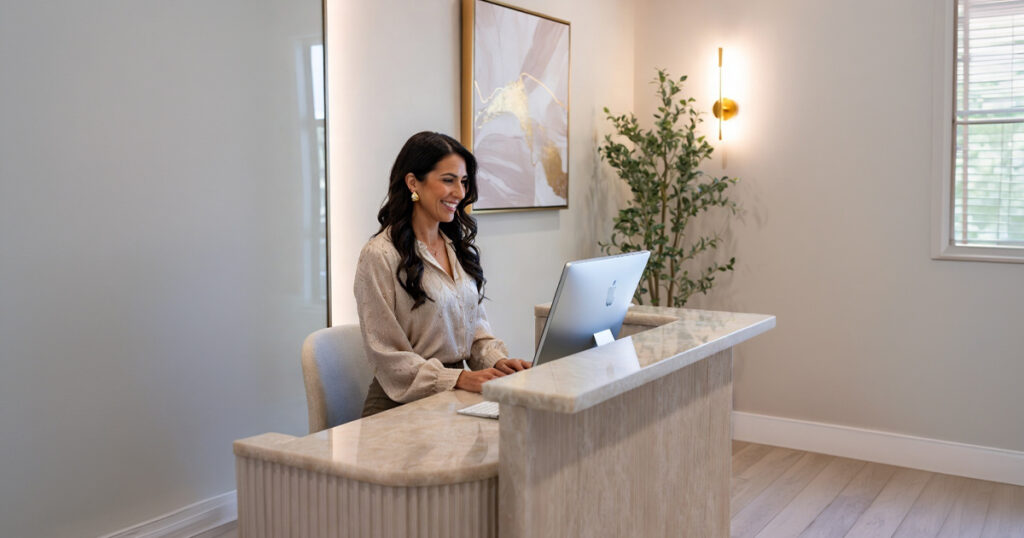
Smiling woman with stylish two-toned hair looking at a patient in a med spa setting.
That is SpotFill. Connect it to your booking platform, approve your branded templates once, and let it run. Every cancellation becomes a branded, compliant, ready-to-post Story in under a minute. Your team stays focused. Your schedule stays full. And that 2 pm cancellation notification stops being devastating and starts being just another slot that fills itself.
With FDA and FTC scrutiny on aesthetic marketing claims intensifying in 2026, having compliant captions automatically generated with every post is not just convenient — it is essential protection for your license and your reputation.
Start Turning Your Stories Into Revenue Today
Want to build a complete content strategy that pairs Stories with a premium brand presence? Luxe helps med spa owners create compliant, high-converting content that keeps clients coming back between appointments.
Disclaimer: All marketing content for aesthetic treatments should comply with FDA and FTC advertising guidelines. SpotFill-generated captions are designed with compliance in mind, but we recommend reviewing all published content with your legal or compliance advisor. Individual fill rate results may vary based on audience size, posting frequency, and market conditions.