





The regulatory landscape for aesthetic marketing has changed. FDA and FTC compliance is no longer something you hand off to your billing department or address after a warning arrives. In 2026, it sits at the center of every marketing decision a med spa or cosmetic practice makes, from the caption on an Instagram Reel to the copy on a treatment landing page.
The numbers make clear why regulators are paying close attention. The U.S. med spa industry is valued at $23 to $26 billion in 2026, a market growing fast enough to attract both significant investment and significant oversight. Social media content from aesthetic practices generates two to three times the engagement of other healthcare verticals. Instagram Stories, TikTok, and Facebook have become the spaces where treatment decisions are made, referrals are generated, and, increasingly, where non-compliant marketing claims are found, flagged, and actioned.
The most common source of regulatory exposure? Captions written under time pressure. Stories posted without review. Marketing copy borrowed from promotional templates without understanding the rules those templates were supposed to operate within. This guide breaks down exactly what those rules are so you can apply them today.
What Is the Difference Between the FDA and the FTC, And Why Does It Matter?
This is the foundational question, and getting it wrong is where most compliance problems begin.

The FDA and FTC are two separate federal agencies with two separate mandates. They overlap in the aesthetic marketing space in ways that create a compliance obligation to both simultaneously, which means a single caption or treatment page can be fully FTC-compliant and still create FDA exposure, or vice versa.
The FDA (Food and Drug Administration) regulates the safety and efficacy of medical devices, drugs, biologics, and cosmetics. In the aesthetic context, the FDA has jurisdiction over the devices used in treatments, the drugs administered, and the claims made about how those devices and drugs work. This specifically covers any claim that implies a medical indication, a treatment of a condition, or a mechanism of action that goes beyond the device’s cleared indication.
The FTC (Federal Trade Commission) regulates advertising and marketing claims. Its jurisdiction covers deceptive practices, misleading endorsements, unsubstantiated efficacy claims, and testimonial compliance. In the aesthetic context, the FTC has jurisdiction over every marketing claim about treatment outcomes, including social media captions, website copy, email marketing, and paid advertising, as well as before-and-after imagery, influencer endorsements, and paid partnerships. You can review the FTC’s current endorsement guidelines directly at ftc.gov.
The practical implication: every piece of content your practice produces for marketing purposes is subject to both agencies simultaneously. The FDA governs what you can claim about the treatment. The FTC governs how you present those claims to consumers.
What Has Changed at the FDA in 2026?
The FDA’s enforcement posture in the aesthetic space has shifted meaningfully this year, and the changes are specific enough that every practice and marketing team needs to understand them directly.
Increased scrutiny on social media treatment promotion. The FDA has formally expanded its monitoring of social media content, with particular attention to claims made in Stories, Reels, and short-form video. Content that previously operated in a regulatory grey area, particularly content referencing treatment mechanisms or implying outcomes in casual conversational language, is now subject to the same standards as formal advertising copy.
Compounded medication marketing. The FDA has tightened its position on marketing claims for compounded medications, including semaglutide compounds, custom peptide formulations, and compounded versions of popular aesthetic injectables. Practices marketing these products must ensure that efficacy and safety claims are consistent with the specific compounded formulation rather than the branded equivalent. The FDA’s current guidance on compounded drug products outlines the scope of these requirements.
Device promotion beyond cleared indications. The FDA has increased enforcement around off-label device promotion, specifically practices marketing treatments for indications beyond the device’s FDA clearance. Marketing RF microneedling for conditions beyond its cleared indications creates FDA exposure regardless of how the claim is phrased.
Growth factor and biostimulator marketing. As the regenerative aesthetics category has expanded rapidly in 2026, the FDA has issued guidance clarifying the regulatory status of exosome products, PDRN formulations, and growth factor therapies. Practices marketing these treatments must ensure claims are consistent with the regulatory classification of the specific product being used. The FDA’s guidance on human cells, tissues, and cellular products is directly relevant to this category.
Five Things the FDA Regulates in Aesthetic Medicine
Understanding the scope of FDA jurisdiction removes the ambiguity that leads to most compliance mistakes.
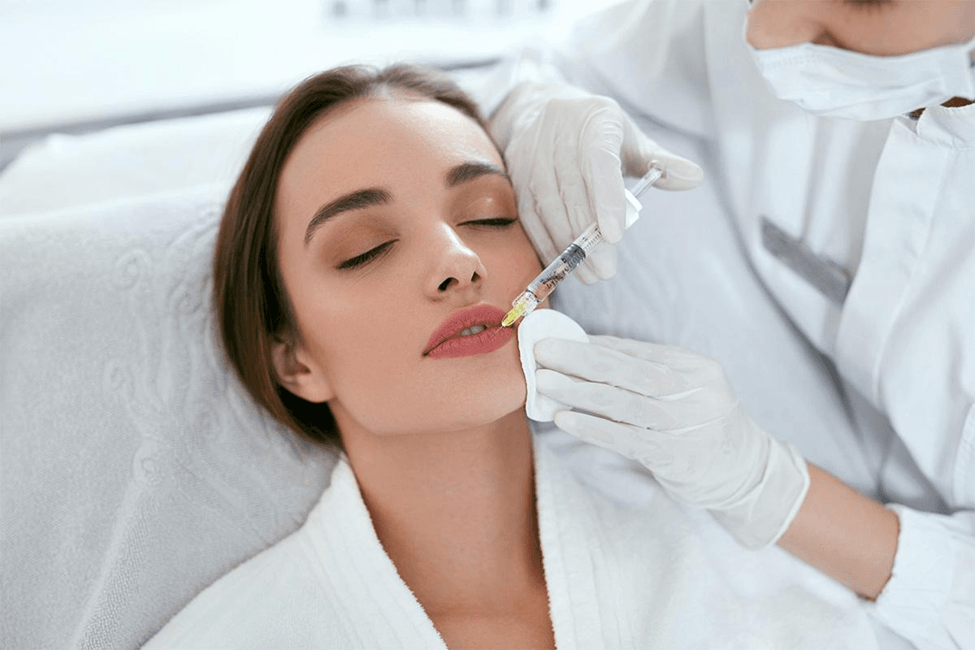
1. Botulinum toxin products. Botox, Dysport, Xeomin, Daxxify, and Jeuveau are all FDA-approved drugs. Marketing claims must be consistent with approved indications and cannot imply uses or outcomes beyond what the approval covers. “Treats” is a drug claim. “Commonly used to address the appearance of” is not.
2. Dermal fillers. FDA-cleared dermal fillers are regulated as medical devices. Claims about their mechanism of action, duration of effect, and specific indications must align with the device’s clearance. Generalizing outcomes across filler categories can create regulatory exposure. The FDA’s database of cleared aesthetic devices is a useful reference for checking cleared indications.
3. Energy-based devices. Lasers, RF devices, HIFU platforms, body contouring technology, and light-based devices are all FDA-regulated medical devices. Marketing claims must be consistent with the specific device’s cleared indication, not the category generally.
4. Compounded medications. Any compounded medication administered or marketed by an aesthetic practice, including weight management compounds, custom peptide formulations, and vitamin infusions, falls under FDA oversight. Marketing claims must reflect the specific compounded product rather than borrowing efficacy language from an FDA-approved branded equivalent.
5. The cosmetic versus drug distinction. A product or treatment is cosmetic if it alters appearance. It becomes a drug if it claims to affect the structure or function of the body. “May help improve the appearance of” is cosmetic language. “Rebuilds collagen” is a structure-and-function claim, making it a drug claim, regardless of whether the underlying treatment is classified as a device or a cosmetic. This distinction is the single most commonly violated line in aesthetic marketing content
Med Spa Advertising Rules in 2026: A Practical Compliance Framework
Understanding the regulatory framework is the foundation. Applying it to actual marketing decisions is where compliance either holds or breaks down.
Rule 1: Qualify every outcome claim. Every claim about what a treatment may do for a patient requires qualifying language. “May help improve the appearance of,” “commonly used to address,” “individual results vary,” and “consult with a qualified provider” are not optional softeners. They are the language that separates compliant marketing from non-compliant marketing under both FDA and FTC standards.
Rule 2: Substantiate every statistic. If your marketing content references a clinical statistic, that statistic must be attributable to a specific, verifiable source and must accurately represent what the source actually found. Rounding up, generalizing from one study population to all patients, and omitting study limitations all create FTC exposure. The FTC’s policy statement on deceptive advertising lays out the substantiation standard directly.
Rule 3: Disclose every material connection. FTC endorsement guidelines require disclosure of any material connection between a practice and anyone creating content about it. This includes patients who received free or discounted treatments in exchange for a review or post, staff members posting on personal accounts, and influencer partnerships of any size. The FTC’s updated guidance on social media disclosures is worth bookmarking.
Rule 4: Before-and-after content requires atypicality disclosure. Any before-and-after content used in marketing requires clear disclosure of whether the result shown is typical. If the result is not typical, it must be identified as such, adjacent to the image, not buried in a caption.
Rule 5: Platform compliance is not regulatory compliance. Instagram approving a post does not mean it is FDA- or FTC-compliant. Platform content policies and federal regulatory standards are entirely different frameworks. A compliance review process within the practice, applied to all content before publication, is the only reliable protection.
Why Generic Marketing Agencies Are a Compliance Risk for Aesthetic Practices
A generalist content agency producing marketing for a med spa risks producing ineffective content. It risks producing non-compliant content that exposes the brand to FDA and FTC scrutiny, gets flagged and restricted by platforms, and undermines the premium brand positioning that justifies premium pricing in this market.
The compliance requirements that govern aesthetic marketing are specific, technical, and updated regularly. They require an understanding of FDA device clearance categories, FTC endorsement disclosure standards, the cosmetic-versus-drug distinction, and the specific language boundaries that separate defensible marketing claims from regulatory violations. A generalist agency does not know these boundaries. Aesthetic marketing requires a specialist.

The Compliance Checklist Every Aesthetic Practice Needs in 2026
Before any piece of content is published, run it through this framework.
Language check:
- Does every outcome claim use qualified language such as “may help,” “commonly used to,” and “individual results vary”?
- Does the content avoid absolute claims like “eliminates,” “guaranteed,” “permanent,” “completely safe,” or “no side effects”?
- Does the content avoid claims about medical conditions, such as “treats rosacea,” “cures acne,” or “prevents aging”?
Disclosure check:
- If the content features a patient result, is “individual results vary” disclosed adjacent to the result?
- If the content was created by someone with a material connection to the practice, is that connection disclosed clearly and prominently?
- If the content references a clinical statistic, is the source identified and accurately represented?
Device and drug check:
- Are all treatment claims consistent with the FDA clearance or approval of the specific device or drug being marketed?
- Does any claim imply a medical indication or mechanism of action beyond the cleared or approved use?
Platform versus regulatory check:
- Has the content been reviewed against FDA and FTC standards, not just platform guidelines?
- Is there a documented review process in place that applies to all content before publication?
If the answer to any of these questions is no, the content needs revision before it goes live.
If you’re worried about FDA & FTC compliance rules and don’t know how you can keep your marketing and content compliant, we have the solution. Check out our Newsletter/Blog Vault & Content Vault to learn more about our products and pricing.