
Your Website Is Not a Digital Brochure. It Is Your Highest-Volume Sales Conversation — and Most Aesthetic Practices Are Losing It Before the First Sentence Is Finished.

Every day, a high-value patient visits your website, reads the first two sentences of your homepage, and leaves.
Not because she was not interested. Not because your treatments do not match what she is looking for. But because the words on your website failed to do the one thing that every luxury brand — in any category, at any price point — must do within seconds of first contact: make the right person feel that she has arrived somewhere that understands her completely.
In a US med spa market valued at $23–$26 billion in 2026, the aesthetic practices filling their books with high-value, high-retention patients are not simply the ones with the most sophisticated treatments or the most recognizable injectors. They are the ones whose website copy converts a passing visit into a booked consultation — because every word on every page was written with a precise understanding of who that patient is, what she is afraid of, what she desires, and what it will take to earn her trust before she has ever stepped through your door.
This is what premium website copywriting does for aesthetic practices. And the gap between the clinics who understand this and those who do not is widening every month.
Compliance note: All website copy for aesthetic treatments must comply with FDA guidelines on medical advertising and FTC regulations requiring truthful, non-deceptive claims. Absolute outcome language, unsubstantiated superiority claims, and results-oriented copy without appropriate disclaimers are non-compliant. “Individual results may vary” is required wherever treatment outcomes are referenced.
What Copywriting on a Website Actually Means for Aesthetic Clinics
Copywriting is not writing. The distinction matters enormously — and most aesthetic practices conflate the two at significant cost.
Writing describes. Copywriting persuades. Writing tells a prospective patient what treatments you offer. Copywriting makes her feel that those treatments were designed specifically for the version of herself she is working toward — and that your practice is the only credible place to pursue them. Writing fills a webpage. Copywriting fills an appointment book.
In the aesthetic industry specifically, premium website copy operates on three distinct levels that generic content cannot reach. It establishes clinical authority — communicating expertise through the precision and depth of its language rather than through a list of credentials in a sidebar. It speaks to the emotional undercurrent of every aesthetic decision — the desire to feel confident, the anxiety about looking unnatural, the vulnerability of trusting someone with your appearance — without ever being explicit about it. And it creates a seamless, frictionless journey from the patient’s first moment of curiosity to the moment she submits a booking request, with every word along the way reinforcing the conviction that she has made the right choice.
The practices whose website copy achieves all three of these things simultaneously are not producing more content than their competitors. They are producing more intentional content — and the commercial difference is profound.
What Plays the Most Important Role in Driving Website Traffic and Conversions
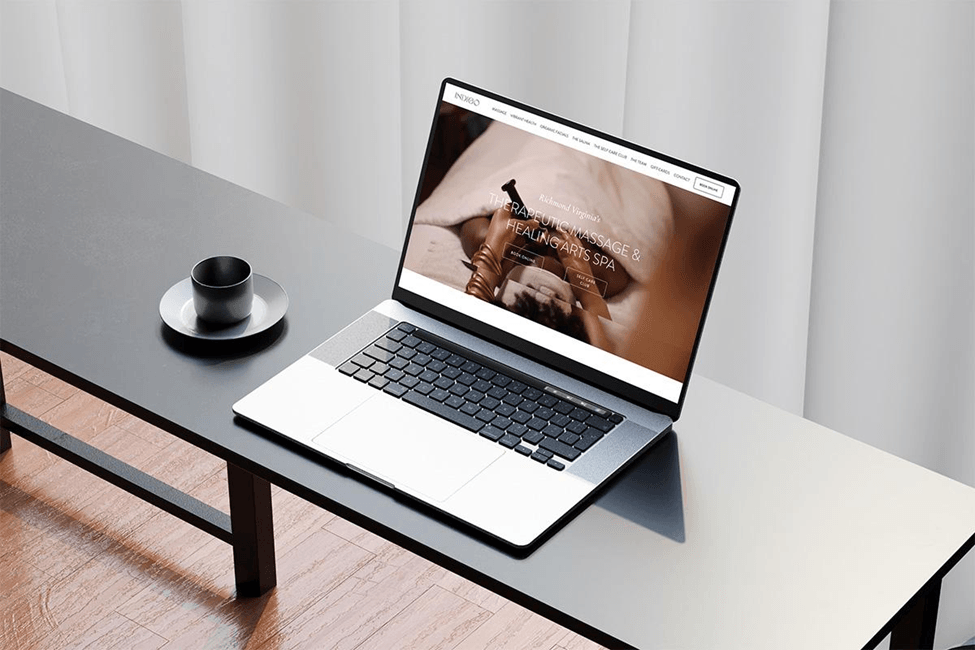
The question most aesthetic clinic owners ask about their website is a traffic question: how do we get more people here? The question they should be asking is a conversion question: of the people already arriving, how many are we losing — and why?
Google’s 2026 E-E-A-T framework has made one thing unambiguously clear: the websites earning and sustaining organic traffic in the medical aesthetics space are those demonstrating genuine expertise, clinical authority, and trustworthiness through the quality of their written content. A technically optimized website with thin, generic copy will not rank against a clinically authoritative website with deep, patient-first content — regardless of how many backlinks it has accumulated.
But traffic without conversion is an expensive vanity metric. And conversion, at every stage of the patient journey, is a copywriting problem. The homepage copy that fails to establish premium positioning within three seconds loses the patient before she has seen a single treatment. The treatment page copy that describes a procedure rather than addressing the patient’s specific fears and desires fails to move her from interest to inquiry. The about page copy that lists qualifications without communicating the human expertise behind them fails to build the personal trust that aesthetic patients require before committing to a provider.
Each of these failures is invisible in a Google Analytics dashboard — they appear simply as a bounce, a short session, a conversion rate that refuses to move regardless of how much is spent on traffic acquisition. Premium copy fixes these failures. And in a market where no-show rates are running at 17–22% and the cost of acquiring a new patient continues to rise, the practices investing in copy that converts at a higher rate are generating compounding returns on every other marketing investment they make.
How to Attract High-Value Patients to Your Aesthetic Practice Through Copy
High-value patients — those who invest consistently in their aesthetic care, who refer without being incentivized, and who are not primarily driven by promotional pricing — do not respond to the same copy that drives volume bookings. They are making a different kind of decision, governed by a different set of priorities, and your website copy must meet them there.
The high-value aesthetic patient in 2026 is not searching for the least expensive option. She is searching for the most trustworthy one. She wants evidence — in the language of your homepage, the depth of your treatment pages, the tone of your patient journey — that the people behind this practice understand aesthetics at a level that justifies the investment she is about to make. She wants to feel that your practice operates at the intersection of clinical excellence and genuine personal care. And she wants to reach that conclusion herself, through her own reading, rather than being sold to.
This is why the copy architecture of a high-converting aesthetic website begins not with the practice’s achievements but with the patient’s aspirations. A homepage that opens with “We offer the latest in injectable aesthetics and laser treatments” is speaking to no one in particular. A homepage that opens by acknowledging the specific desire for results that look genuinely natural — that enhance rather than alter — and immediately positions your practice as the expert in delivering exactly that, is speaking directly to the patient who has been burned by over-treatment elsewhere and is now looking for someone she can truly trust.
The Website Copy Mistakes Costing You High-Value Patients

Most aesthetic practices do not lose high-value patients to a competitor with better treatments. They lose them to a competitor with better copy — and they never know it happened.
Describing procedures instead of addressing patients. A treatment page that opens with the clinical mechanism of Botox is answering a question no high-value patient is actually asking. She is not asking what Botox is. She is asking whether this practice understands what she wants — and whether the person holding the syringe has the precise aesthetic sensibility to deliver it without her looking like she has had work done. Copy that leads with clinical description rather than patient aspiration loses her in the first paragraph.
Burying the booking CTA. The single most common conversion failure on aesthetic clinic websites is a booking call-to-action that appears once, at the bottom of a page the patient may never reach. A high-converting treatment page places its CTA at multiple natural decision points — after the authority-building introduction, after the social proof, and again at the close — because different patients reach their booking decision at different moments in their reading. Copy that makes a patient go looking for how to book has already introduced unnecessary friction into the most commercially critical moment of her visit.
About pages that list rather than connect. A provider bio that reads as a credentials inventory — board certifications, training programs, years of experience — communicates qualification without communicating character. The high-value patient choosing an aesthetic provider is not making a purely clinical decision. She is making a trust decision. An about page that communicates the practitioner’s specific aesthetic philosophy, her approach to natural results, and the genuine care behind her clinical work builds a personal connection that a list of qualifications never can.
Inconsistent brand voice across digital touchpoints. Website copy that establishes a premium standard that email campaigns, social captions, and appointment communications do not maintain creates a brand inconsistency high-value patients register immediately — even subconsciously. The most commercially effective aesthetic brands in 2026 maintain a single, recognizable editorial voice from homepage to booking confirmation. That consistency is not a stylistic preference. It is a trust signal.
FTC reminder: Website copy must avoid absolute efficacy claims, unsubstantiated comparisons, and results-oriented language without appropriate disclaimers. “Individual results may vary” is required wherever treatment outcomes are referenced or implied.
Five Steps to Building a High-Converting Website for Your Aesthetic Practice
1. Audit your current copy for patient-centricity. Read every page of your website and ask one question: is this speaking to the patient’s desires and anxieties, or is it speaking about the practice’s capabilities? Every page that answers the latter needs to be rewritten from the patient’s perspective inward.
2. Build dedicated, deeply optimized treatment pages. Every high-revenue treatment deserves its own page — not a paragraph in a services menu. Each page should address patient concerns directly, demonstrate clinical expertise specifically, include compliant outcome references with appropriate disclaimers, and end with a single, clear booking CTA.
3. Rewrite your homepage as a positioning statement. Your homepage has one job: to make the right patient feel, within three seconds, that she has found the practice she has been looking for. Premium positioning, clinical authority, and a clear articulation of who you serve and how you differ from the alternatives should be established before the fold.
4. Make your about page do authority work. Provider credentials belong on your about page — but so does the human expertise behind them. The injector’s specific aesthetic philosophy, her approach to natural results, and her clinical perspective presented in accessible rather than academic language build the personal trust aesthetic patients require before committing to a provider.
5. Align your copy standard across every touchpoint. Website copy that establishes a premium standard your email campaigns and social content do not maintain creates a brand inconsistency that high-value patients notice. The most commercially effective aesthetic brands in 2026 maintain a single, recognizable editorial voice from homepage to appointment reminder — and that consistency is itself a form of premium positioning.
Frequently Asked Questions: Website Copy for Aesthetic Clinics
What is copywriting on a website and why does it matter for aesthetic practices?
Website copywriting is the strategic use of language to guide a prospective patient from curiosity to conversion — addressing her specific desires, anxieties, and decision-making criteria at every stage of her visit. For aesthetic practices, it is the difference between a website that informs and one that converts. In a market where high-value patients are making deeply personal decisions about their appearance, copy that demonstrates genuine clinical understanding and builds trust before the first consultation is among the most commercially valuable assets a practice can own.
How does premium website copy attract high-value aesthetic patients specifically?
High-value patients are not primarily motivated by price or promotions — they are motivated by trust and expertise. Premium copy attracts them by demonstrating, through the precision and depth of its language, that the practice operates at a clinical and experiential standard that justifies their investment. A homepage that speaks directly to the desire for natural, refined results — and an about page that communicates the practitioner’s specific aesthetic philosophy — builds the personal confidence a high-value patient needs before she will commit to a provider with her appearance.
How do smart aesthetic clinic websites drive real patient growth?
High-converting aesthetic websites treat every page as a specific stage in the patient’s decision journey — with copy engineered to move her from awareness to trust to action at each step. Treatment pages that lead with patient concerns rather than clinical descriptions, about pages that build human connection alongside credentials, and booking flows with strategically placed CTAs consistently outperform standard aesthetic websites on conversion metrics. Paired with an SEO content strategy that drives qualified organic traffic, a copy-optimized website compounds in commercial value every month it is live.
Luxe Digital Collective: The Copy Standard Your Practice Deserves
Premium website copy is not a one-time project. It is an ongoing investment in the quality of the first impression your practice makes on every prospective patient who finds you — through search, through social, through referral — and in the conversion infrastructure that turns that impression into a consultation.
At Luxe Digital Collective, we write website copy exclusively for medical aesthetic practices — a copy that positions your brand at the premium tier your clinical work deserves, speaks directly to the high-value patient you are building your practice around, and meets the FDA/FTC compliance standard your industry requires. From homepage strategy and treatment page architecture to about page positioning and patient journey copy, every word we write is engineered to convert.
Explore Our Website Copy Services →
And while your website copy is doing the work of converting high-value patients, ensure that revenue is being protected at every stage of the patient journey. With no-show rates at 17–22% and losses reaching $134,000 annually, the team at SpotFill ensures that the appointments your copy generates are the appointments that actually happen — through intelligent, automated cancellation recovery that fills empty slots in real time.
🎁 Free Resource: The Content Marketing Audit Checklist

Before your next website update goes live, run it through the Luxe Content Marketing Audit Checklist — a premium, field-tested evaluation framework designed specifically for aesthetic clinics. In under 30 minutes, assess the quality, compliance posture, and conversion potential of your current digital content across every channel.
Download Your Free Checklist →
Because a luxury practice deserves a website that works as hard as the team behind it.
Luxe Digital Collective produces compliance-aware digital marketing exclusively for the medical aesthetics industry. All content is produced in alignment with current FDA and FTC guidelines. Marketing outcomes vary based on market conditions, implementation quality, and individual practice variables. Nothing in this post constitutes legal, medical, or regulatory advice. Individual results may vary.