





How Premium Med Spas Are Building Brands That Command Loyalty, Justify Premium Pricing, and Win the Patients Worth Winning
Luxury brand positioning in aesthetics is the difference between a med spa that competes on price and one that never has to. In a U.S. aesthetic medicine market valued at $23 to $26 billion in 2026 — saturated with practices offering the same treatments, the same devices, and increasingly the same promotional language — the practices that win on margin, retention, and referral aren’t winning on clinical superiority alone. They’re winning on brand.
That’s a distinction worth sitting with. Two practices in the same metropolitan market can offer identical Botox, identical RF microneedling, identical dermal filler protocols — from the same device manufacturers, trained by the same instructors — and charge prices that are forty percent apart. The difference isn’t the treatment. It’s the brand experience surrounding it. It’s the content that appears when a potential patient searches. It’s the visual language of every Instagram Story. It’s the tone of every email, the design of every touchpoint, and the consistency of a positioning that signals — before a single consultation is booked — that this practice operates at a different level.
In 2026, with FDA and FTC scrutiny on aesthetic marketing claims at its highest point in years, and with social media content from aesthetic practices generating two to three times the engagement of other healthcare verticals, the stakes of brand positioning have never been higher — or the opportunity for differentiation never clearer.
At Luxe Digital Collective, luxury brand positioning is the foundation of everything we build for aesthetic clients. This is the framework we apply — and the one every premium practice should understand.
What Does Brand Positioning Actually Mean — And Why Does It Matter for Med Spas?
Brand positioning is one of those terms that gets used frequently in marketing conversations and understood precisely almost never. Let’s be direct about what it actually means — because the definition determines everything that follows.
Brand positioning is the deliberate construction of how a specific audience perceives a specific practice relative to every alternative available to them. It’s not a logo. It’s not a color palette. It’s not a tagline. Those are expressions of positioning — they’re not the positioning itself.
Positioning is the answer to a single question that every potential patient is asking, consciously or not, every time they encounter a practice: why this one, and not the others?
For a luxury aesthetic practice, the answer to that question needs to operate on three levels simultaneously.
Functional positioning — what the practice offers that competitors don’t, or does demonstrably better. Advanced technology. Specific clinical expertise. A treatment modality that requires specialized training. These are the rational justifications that a patient can articulate when explaining why they chose a specific provider.
Emotional positioning — how the practice makes a patient feel from the first digital touchpoint through the post-treatment follow-up. Confidence. Trust. Being seen and understood. The sense that this is a practice that operates at the level of care and attention that justifies the investment. Luxury brands in every category — from hospitality to automotive to fashion — are built on emotional positioning first, with functional justification as support.
Social positioning — what choosing this practice says about the patient. In the aesthetic context, this is the positioning that drives referral. When a patient recommends a practice to a friend, they’re not just recommending a treatment. They’re sharing a piece of their own identity — the judgment call that led them to a provider they’re proud to be associated with. Luxury positioning makes that referral feel like a gift rather than a recommendation.
All three levels need to be consistent across every touchpoint — digital, physical, and interpersonal — for positioning to function as a genuine competitive advantage rather than an aspiration.
Who Is the Target Market for Medical Spas in 2026 — And What Does Luxury Mean to Them?
Understanding who the luxury aesthetic patient actually is in 2026 is the prerequisite for positioning that resonates rather than positioning that simply sounds premium.

The primary demographic for luxury aesthetic services remains women aged 30 to 55 — educated, professionally successful, with discretionary income and high standards for both outcomes and experience. But the profile has evolved meaningfully in 2026 in ways that should directly inform how a practice positions itself.
They are research-driven. The luxury aesthetic patient in 2026 arrives at a consultation having read extensively about the treatment she’s considering. She has watched provider explainer videos on TikTok, read clinical blogs, compared before-and-after results, and evaluated the digital presence of multiple practices before deciding who is worth her time. A practice that doesn’t have a substantive, authoritative content presence is already at a disadvantage before the consultation begins.
They are compliance-aware. A growing segment of the luxury aesthetic patient market has become attuned to the language of compliant marketing — and they use it as a trust signal. A practice that makes absolute outcome claims, that uses “guaranteed” and “completely safe” language, reads as less sophisticated and less trustworthy than one that uses qualified, evidence-based language. Compliance isn’t just a regulatory obligation in 2026. For luxury positioning, it’s a brand differentiator.
They are increasingly male. The male aesthetic market is one of the fastest-growing segments in the $23 to $26 billion U.S. med spa space. Men’s Botox, RF microneedling, Emsculpt, and body contouring have moved firmly into the mainstream for professional men in the 35 to 60 demographic — and luxury positioning that speaks to this audience with appropriate sophistication is a meaningful white space in most markets.
They value discretion as much as results. For the luxury aesthetic patient, the experience of being treated — the privacy, the professionalism, the absence of anything that feels clinical or transactional — is as important as the treatment outcome itself. Positioning that communicates discretion, restraint, and elevated experience consistently outperforms positioning that leads with promotional offers and social proof volume.
What Are the Latest Spa Trends Shaping Luxury Positioning in 2026?
Understanding the trend landscape isn’t about chasing what’s new. It’s about understanding what the luxury patient is already moving toward — and positioning the practice to meet her there.
Regenerative aesthetics has moved to the center. PDRN therapy, growth factor treatments, biostimulators, and exosome protocols have shifted from emerging to expected at the premium end of the aesthetic market in 2026. Luxury positioning that incorporates regenerative medicine language — skin health, cellular support, biological restoration — resonates deeply with a patient demographic that approaches aesthetics as a wellness investment rather than a cosmetic correction.
Quiet luxury over obvious intervention. The aesthetic ideal that resonates most strongly with the luxury patient in 2026 is the one that looks like excellent aging rather than obvious treatment. Natural-looking results, expression-friendly outcomes, the “I’ve just been sleeping well” effect — this is the positioning language that converts at the premium end of the market, and it requires a clinical philosophy and a marketing language that are aligned.
Personalization as a premium signal. AI-assisted skin analysis, bespoke treatment protocols, and individually tailored maintenance plans are becoming the baseline expectation at luxury practices. Positioning that emphasizes the individualized nature of every patient relationship — rather than standardized treatment packages — communicates the kind of personal attention that justifies premium pricing.
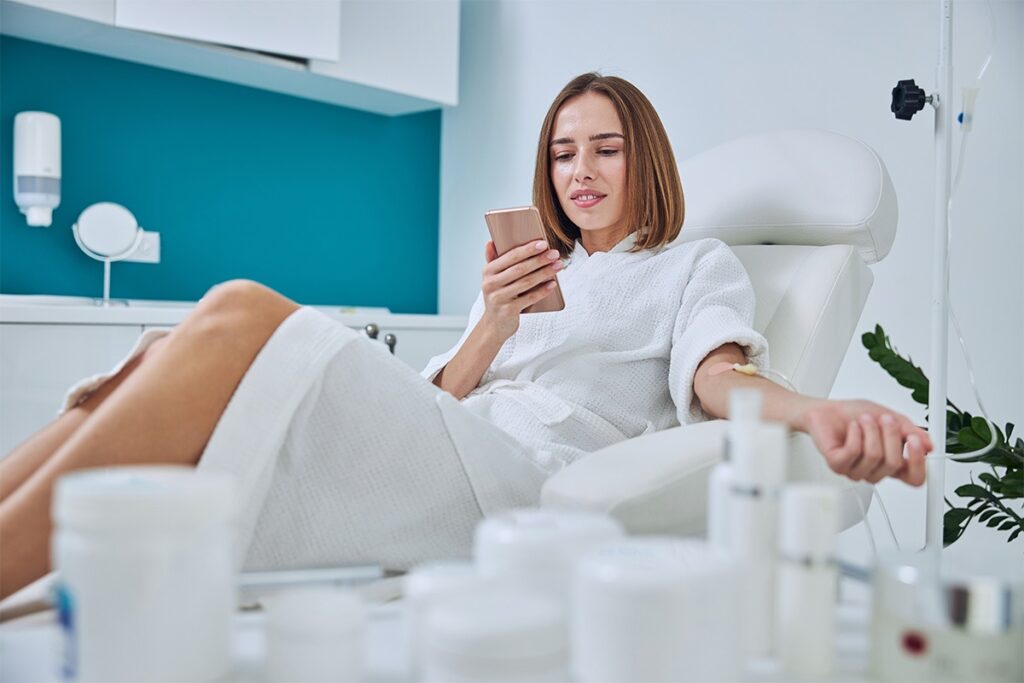
Wellness integration. The boundary between medical aesthetics and luxury wellness has blurred significantly in 2026. Practices that position at the intersection — offering IV therapy, regenerative skin protocols, body contouring, and medical weight loss alongside traditional injectables — capture a broader share of the luxury wellness spend and create multiple entry points for patient acquisition.
How to Create Luxury Premium Marketing for Med Spas
This is where positioning strategy meets practical execution — and where the gap between practices that aspire to luxury positioning and those that achieve it becomes most visible.

Lead with editorial, not promotional. The most effective luxury marketing in aesthetics doesn’t look like advertising. It looks like content — authoritative, beautifully produced, genuinely useful editorial content that educates rather than promotes. The brands that have mastered luxury positioning in adjacent industries — hospitality, fashion, automotive — understand that the promotional impulse undermines luxury perception. Educate. Inspire. Inform. The commercial relationship follows.
Visual consistency is non-negotiable. Every image, every graphic, every story slide, every website page needs to exist within a coherent visual system — consistent color palette, consistent typography, consistent photography style. Inconsistency in visual language signals inconsistency in standards, which is the single most damaging perception in luxury positioning. In a market where social media content from aesthetic practices generates two to three times the engagement of other healthcare verticals, visual consistency is both a brand requirement and an algorithmic advantage.
Language is brand. The specific words a practice uses — in every caption, every blog post, every email subject line, every consultation confirmation — are as much a part of the brand experience as the visual identity. Luxury language is precise, confident, and qualified. It doesn’t shout. It doesn’t over-promise. It doesn’t use exclamation marks in clinical contexts or urgency language that makes a premium practice sound like a flash sale retailer. Every word is a brand decision.
Compliance as positioning. In 2026, FDA/FTC compliant marketing language isn’t just a regulatory requirement — it’s a luxury differentiator. Qualified outcome claims, evidence-based language, transparent risk acknowledgment, and individual results disclosures communicate the kind of clinical integrity that the luxury patient specifically values. A practice that markets compliantly signals that it operates with the same rigor in the treatment room that it applies to its marketing — and that signal is worth more than any promotional offer.
Luxury Marketing Strategies to Attract High-End Customers to Your Practice
The framework that consistently attracts and retains high-end aesthetic patients in 2026 operates on five strategic pillars:
Pillar 1 — Authority content at scale. Monthly SEO-optimized blog content that establishes the practice as the most knowledgeable voice in its market on the treatments it offers. This content builds organic search visibility, establishes clinical credibility, and creates the research-stage trust that luxury patients specifically require before committing to a consultation.
Pillar 2 — Visual brand consistency across every channel. A coherent, luxury-standard visual identity that applies consistently to every digital and physical touchpoint — website, social, email, in-clinic collateral, packaging, and consultation materials.
Pillar 3 — Compliance-first marketing language. FDA/FTC compliant language applied consistently across every piece of content — not as a constraint, but as a brand signal that communicates clinical integrity and regulatory sophistication.
Pillar 4 — Strategic social presence. Platform-appropriate content — Stories for urgency and availability, Reels and TikTok for authority and education, feed posts for brand consistency — produced at the visual and editorial standard that luxury positioning requires. Social media content from aesthetic practices generates two to three times the engagement of other healthcare verticals in 2026. That reach potential is only valuable when the content it’s amplifying is worth amplifying.
Pillar 5 — Specialist marketing partnership. The most successful luxury aesthetic practices in 2026 are not managing their marketing in-house with generalist staff or generalist agencies. They’re working with specialists who understand the aesthetic industry, the regulatory framework, the SEO landscape, and the luxury brand standards that premium positioning requires — simultaneously.
At Luxe Digital Collective, all five pillars are built into every client engagement. Our Blog Vault packages, social media content bundles, brand strategy services, and compliance-aware marketing infrastructure exist specifically to give premium aesthetic practices the marketing foundation their brand deserves — without requiring the practice owner to become a marketing expert to make it work.
FDA/FTC Disclaimer: This blog is for informational and educational purposes only. References to FDA and FTC compliance standards reflect general guidance based on publicly available regulatory information as of 2026. All aesthetic marketing content should be reviewed by a qualified healthcare attorney for compliance with applicable regulations specific to your practice, treatment offerings, and jurisdiction before publication.