






Everything You Need to Know to Stop Losing Revenue to No-Shows, Last-Minute Cancellations, and Unfilled Appointment Slots
A woman in a silk blouse smiles at a med spa receptionist across a marble counter.
Cancellation management for med spas is one of those operational problems that most owners know they have but few have solved systematically. You didn’t open a med spa to spend your mornings chasing down cancellations. But here you are — managing a full clinical schedule, leading a team, maintaining the kind of client experience that justifies premium pricing, and somewhere in the middle of all of that, watching appointment slots disappear from a schedule that was fully booked 24 hours ago.
It’s not a glamorous problem. But for practice owners losing around $7,000 to $8,000 every month to unfilled slots — and more than $134,000 annually in many mid-sized practices — med spa cancellation management may be the highest-ROI operational challenge you can solve in 2026.
This is the guide that covers all of it. The data behind the problem, the policies that actually work, the technology that’s changed the recovery equation, and the systematic approach that separates practices absorbing cancellation losses from practices converting them into revenue.
The “Empty Chair” Syndrome: Measuring the 2026 Revenue Leak
In the high-demand landscape of 2026, time is the only inventory you can’t restock. When a treatment room sits dark because of a late cancellation, it isn’t just a scheduling glitch—it’s a disruption of your clinic’s biological rhythm. Current industry data shows that no-show and last-minute cancellation rates are holding steady between 17% and 22%. If you look at your calendar right now, that represents nearly one out of every five patients failing to walk through your door.
While a single missed connection might feel like a minor inconvenience, the math tells a much more aggressive story. Depending on the complexity of the service, the immediate revenue impact per appointment can reach as high as $500. There is a massive operational gulf between an unfilled 30-minute express service and a two-hour advanced laser resurfacing slot; however, both represent a total loss of fixed overhead and specialist time.

An empty, modern med spa treatment room with a cream-colored medical chair, floor-to-ceiling windows, and minimalist decor.
For the average mid-sized practice owner, these “evaporated” slots aggregate into a monthly revenue drain of $4,000 to $8,000. When you zoom out to the fiscal year, most clinics in the $1M to $3M bracket are absorbing a staggering $134,000+ in annual losses. In 2026, the difference between a plateauing practice and a thriving one often comes down to how effectively the owner “plugs” this six-figure leak.
What Causes Med Spa Cancellations — And Does It Matter?
Understanding why clients cancel helps calibrate the right response — because not all cancellations have the same cause, and not all causes respond to the same solutions.
Schedule conflicts and life changes account for the majority of cancellations across most practices. These are genuinely unavoidable — work demands, childcare, illness, travel. No policy eliminates them. The question is whether a system exists to recover the revenue from the slot they leave behind.
Forgotten appointments are the category most directly addressed by reminder systems. A client who simply forgot they had a 2 PM appointment on Thursday will often keep it if reminded Tuesday morning. Automated reminder sequences — properly implemented — reduce no-show rates by 40 to 50 percent. This is well-established, and every practice should have them running.
Anxiety and avoidance represent a smaller but meaningful category — clients who booked in a moment of motivation and talked themselves out of it by appointment day. This pattern often signals a client relationship or expectation-setting issue that reminder systems alone don’t solve.
Financial hesitation — clients who experience sticker shock between booking and appointment day — is partly addressable through deposit requirements that create financial commitment at the point of booking.
Habitual cancellers are the highest-friction segment — clients with a pattern of late cancellations or no-shows across multiple appointments. Every practice has a few. The question is whether the policy framework creates enough accountability to change the behavior or make the relationship economically unviable.
What this breakdown makes clear: some cancellations can be prevented. Many cannot. A complete med spa cancellation management strategy addresses both — prevention where possible, revenue recovery where prevention fails.
Does Your Cancellation Policy Actually Protect Your Revenue?
A cancellation policy is the foundation of any serious cancellation management approach — but most policies in the aesthetic industry are either too vague to enforce or too aggressive to survive client relationship realities.
Here’s what an effective med spa cancellation policy actually needs to include:
A clear cancellation window. Most providers in the aesthetic space use a 24 to 48 hour cancellation window — meaning cancellations made less than 24 or 48 hours before the appointment trigger a fee. Longer windows are harder to enforce without client friction; shorter windows don’t provide enough operational runway for recovery.
A deposit or card-on-file requirement. Policies without financial teeth don’t change behavior. Requiring a deposit at booking — typically 25 to 50 percent of the treatment value — creates the financial commitment that separates genuine bookings from speculative ones. Card-on-file requirements achieve similar accountability without requiring upfront payment. Either approach meaningfully reduces no-show rates compared to policies with no financial component.
A clearly communicated fee structure. Vague language like “a fee may apply” is functionally unenforceable. Specific language — “cancellations within 24 hours of your appointment will be charged 50 percent of the scheduled service value” — sets clear expectations and creates the contractual basis for enforcement.
Documented client acknowledgment. Clients should explicitly acknowledge the cancellation policy at the time of booking — through a checkbox in online booking, a signed intake form, or a confirmation message that requires active response. Documentation protects the practice if a dispute arises.
A human exception process. The best policies build in a mechanism for genuine emergencies — first-time occurrences, documented illness, family crises. A rigid zero-exception approach damages client relationships and generates the kind of negative reviews that cost more than the fee collected. The goal is accountability, not punishment.
What a cancellation policy cannot do: fill the slot that just opened up. That’s a separate operational challenge requiring a separate solution — and it’s where most practices leave the most money on the table.
What’s the Best Way to Fill a Cancellation Slot Fast?
When a slot opens, a practice has a narrow and rapidly closing window to fill it. The dynamics of same-day and next-day cancellation recovery are fundamentally different from the reminder-based prevention of no-shows — and they require a different approach.

The waitlist approach is the traditional answer — a list of clients who’ve expressed interest in earlier appointments. Manually working a waitlist requires front desk time, produces inconsistent results, and depends entirely on who happens to be available and responsive at the moment of outreach. Fill rates on manual waitlist outreach typically run 10 to 15 percent under good conditions.
The SMS blast approach — sending a text to a segment of the client list about the open slot — produces fill rates of 4 to 5 percent on average. Low engagement, high noise, limited urgency.
The email approach performs similarly to SMS for same-day recovery — open rates in the aesthetic category average 20 to 25 percent, and by the time a client opens, reads, and responds to an email about a same-day slot, the window has often closed.
The Instagram Stories approach is where the data diverges significantly from conventional outreach. Stories-based content generates two to three times the engagement of SMS and email in the aesthetic and wellness category — and the format’s built-in 24-hour disappearing mechanic creates genuine urgency that drives immediate action. Practices using Story-based cancellation outreach are reporting fill rates of 35 to 50 percent on last-minute openings.
The performance gap between Stories and traditional outreach isn’t marginal. It’s the difference between recovering one in twenty cancellations and recovering one in two. For the complete breakdown of why Stories outperform every other recovery channel, see [why Instagram Stories fill open slots faster than SMS or email]. [Internal link → Instagram Stories blog]
Why Do Most Med Spas Still Rely on SMS and Email for Recovery?
If Instagram Stories outperform SMS and email by that margin, why are most practices still defaulting to traditional outreach for cancellation recovery?
The honest answer is execution friction.
Posting a properly branded, professionally designed Story — one that reflects the premium positioning of an aesthetic practice rather than looking like a hastily assembled placeholder — requires design capability, brand consistency, and platform fluency that most practice owners and front desk teams simply don’t have available at 10 AM when cancellations are stacking up.
Add the compliance layer — every Story that references a treatment or outcome needs to meet FDA and FTC standards, and manually crafting compliant captions under time pressure is genuinely difficult — and the execution barrier becomes clear.
The practices that are successfully using Stories for cancellation recovery have either invested in dedicated social media support or adopted a tool that removes the execution barrier entirely. For most busy practice owners, the latter is the only realistic path.
How Does Automated Cancellation Recovery Actually Work?
The systematic approach that’s producing 35 to 50 percent fill rates in 2026 shares a consistent operational profile:
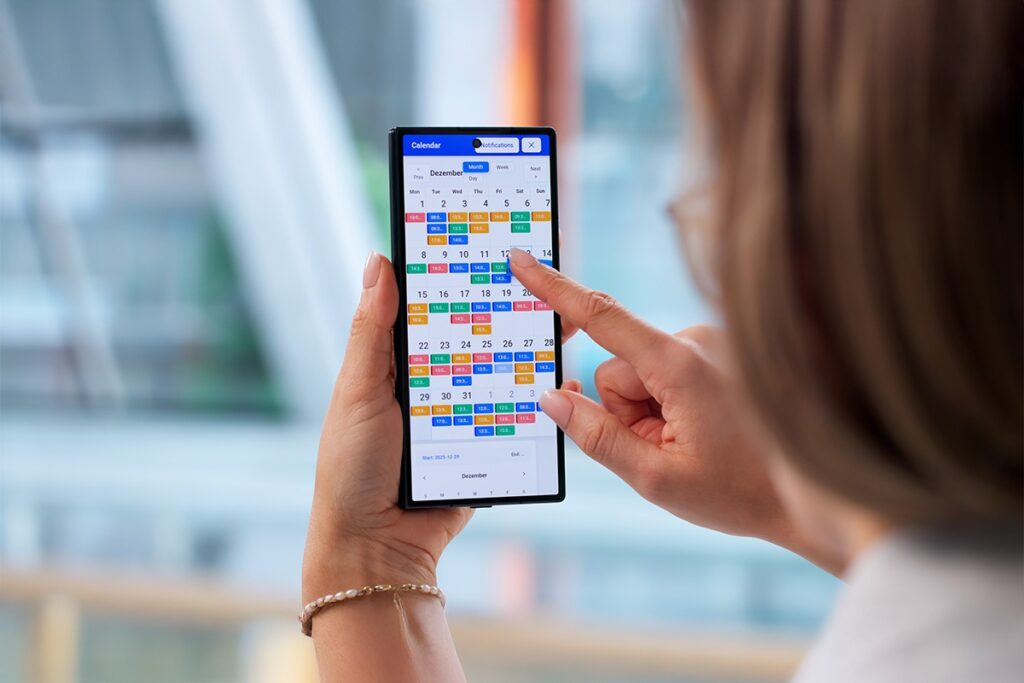
Instant detection. The system connects directly to the practice’s booking platform — Mindbody, Square, Vagaro, or equivalent — and detects cancellations the moment they register. No manual monitoring. No front desk bottleneck. For a comparison of how each booking platform supports cancellation recovery, see [Mindbody, Square, or Vagaro — which works hardest for your med spa]. [Internal link → Blog 7]
Automatic content generation. Within 60 seconds of a cancellation, professionally branded Story slides are generated — specific to the treatment, specific to the time slot, formatted for Instagram, TikTok, and Facebook Stories — and delivered directly to the practice owner’s phone and email.
Compliance built in. Every caption is professionally written and FDA/FTC compliant by design. No improvised language. No regulatory risk from time-pressured manual posting.
Direct booking integration. The Story links directly to real-time availability in the booking system — one tap from the Story to a confirmed appointment. No friction. No intermediary steps that lose the client between interest and booking.
This is the operational infrastructure that turns a cancellation from a revenue loss into a revenue recovery opportunity — systematically, every time, without adding work to an already stretched team.
How Does SpotFill Help Med Spas Recover Cancellation Revenue?
SpotFill was built around a single operational reality: med spa owners are losing six figures annually to cancellations not because they lack awareness of the problem, but because the tools available to them weren’t designed for the speed and consistency that recovery actually requires.
When a cancellation registers in a connected booking system — Mindbody, Square, or Vagaro — SpotFill automatically generates two professionally branded Story slides optimized for Instagram, TikTok, and Facebook, and delivers them to the practice owner’s phone and email within 60 seconds. Every caption is FDA/FTC compliant. Zero design work. Zero manual effort. Complete brand consistency.
The result: practices using SpotFill are achieving 35 to 50 percent fill rates on last-minute cancellations — converting revenue that was previously being absorbed as the unavoidable cost of running a service business.
Med spa cancellation management doesn’t have to mean policy enforcement, manual outreach, and hoped-for recoveries. With the right system, it means a 60-second automated process that turns every cancellation into an immediate recovery opportunity.
What Does a Complete Cancellation Management System Look Like?
The practices with the lowest effective cancellation loss rates in 2026 aren’t relying on any single solution. They’re running a layered system in which each component addresses a different part of the problem:
Layer 1 — Prevention: Automated reminder sequences reducing no-show rates by 40 to 50 percent. Deposit or card-on-file requirements creating financial commitment at booking. Clear, consistently enforced cancellation policies setting behavioral expectations.
Layer 2 — Recovery: Automated Story-based outreach activating within 60 seconds of a cancellation. Direct booking integration removing friction between interest and conversion. Platform-native content generating two to three times the engagement of SMS and email.
Layer 3 — Analysis: Monthly review of cancellation patterns by provider, treatment type, day of week, and lead time. Data-informed adjustments to scheduling, overbooking strategy, and client segmentation. Identification of habitual cancellers for targeted policy enforcement or relationship review.
No single layer solves the problem. All three together create a system where cancellations are managed proactively, recovered aggressively, and analyzed continuously — compressing revenue loss to the smallest operationally achievable fraction.
What Should a Med Spa Owner Do to Reduce Cancellation Losses?
Cancellation management is one of those operational problems that rewards action disproportionately. The practices recovering the most from cancellations didn’t build perfect systems overnight — they started with the highest-leverage interventions and built from there.
This week, three things are worth doing:
Calculate your actual cancellation loss. Check out SpotFill’s real calculation to get a concrete monthly and annual number based on your appointment value, cancellation rate, and provider count. Abstract awareness of the problem is less motivating than a specific dollar figure.
Audit your current cancellation policy. Does it have financial teeth? Is it documented and acknowledged at booking? Is it consistently enforced? A policy that exists on paper but isn’t enforced provides zero protection.
Evaluate your recovery approach. When a slot opens today, what happens? How fast? Through what channel? With what conversion rate? If the honest answer is “a front desk team member makes a few calls and sends a text,” you already know the fill rate — and you already know the revenue being left behind.
Medical Disclaimer: This blog is for informational purposes only and does not constitute medical, legal, or regulatory advice. Statistics referenced reflect industry estimates and may vary by practice type, size, and location. FDA/FTC compliance requirements vary by jurisdiction — consult a qualified healthcare attorney regarding your specific marketing obligations.