FDA/FTC Compliant Caption Templates for Last Minute Med Spa Booking Stories 2026

How to Fill Open Slots Fast Without Putting Your Practice at Regulatory Risk Somewhere between the cancellation hitting your booking system and the moment you need a Story live on Instagram, TikTok, and Facebook — there’s a window where most med spa owners make the same mistake. They write the caption fast. FDA/FTC compliant captions for med spas are the last thing on anyone’s mind when a slot just opened at 10 AM and the front desk is handling three other things simultaneously. And in that rush, the language that goes out — “get rid of wrinkles,” “guaranteed results,” “completely safe” — crosses a line that the FTC and FDA have made increasingly clear they are watching. It’s not carelessness. It’s pressure. And in 2026, that pressure is only increasing. FDA and FTC scrutiny on aesthetic marketing claims has intensified significantly across all social media channels — including Stories, which were once considered too ephemeral to attract regulatory attention. They aren’t anymore. Any promotional content referencing treatments, outcomes, or efficacy claims is subject to FTC endorsement guidelines and applicable FDA regulations on device and treatment promotion — regardless of whether it disappears in 24 hours. For a med spa owner trying to recover a cancelled appointment slot in real time, this creates a genuine operational challenge. The caption needs to be fast. It needs to be compelling. And it needs to be compliant — every single time, without exception. This is the guide that solves that challenge. FDA/FTC compliant caption templates built specifically for the time pressure of same-day cancellation recovery — so every Story that goes out protects the practice while still converting the slot. What Makes an Aesthetic Marketing Caption Non-Compliant? Before getting into templates, it’s worth understanding exactly what creates regulatory risk — because the line between compliant and non-compliant language is specific enough that understanding it changes how you write every caption going forward. The FTC’s primary concern is deception. Any claim that a reasonable consumer could interpret as a guarantee of a specific outcome — without adequate qualification — is potentially deceptive under FTC guidelines. In aesthetic marketing, this shows up in three main ways. Absolute outcome claims. Language that implies guaranteed, universal, or permanent results. “Eliminates wrinkles.” “Removes all pigmentation.” “Permanent hair removal.” These are the most obvious violations — and the most commonly made in rushed caption writing. Unqualified before-and-after implications. Before-and-after content that suggests typical results without adequate disclosure that individual results vary is a compliance risk. The FTC specifically requires that atypical results be identified as such. Safety overclaims. Phrases like “completely safe,” “no side effects,” “risk-free,” or “painless” are safety claims that require substantiation. In the aesthetic category, where treatments carry genuine risk profiles that vary by individual, these claims are almost never appropriate without significant qualification. The FDA’s concern overlaps in the area of device and treatment promotion — specifically, any claim that a device or treatment “treats,” “cures,” or “prevents” a medical condition. Describing Botox as something that “treats” forehead wrinkles rather than something “commonly used to address the appearance of” forehead wrinkles is the kind of distinction that matters in regulatory terms. Here’s the practical upside of understanding this framework: compliant language isn’t weaker language. It’s a more precise language. And precision, in the context of aesthetic marketing, communicates sophistication and credibility rather than diminishing the appeal of the offer. What Language Is Always Safe — And What Should Never Appear in Your Captions? Think of this as your quick-reference compliance framework — the one that goes on the wall next to the booking system and gets sent to every team member who posts on behalf of the practice. Always safe — use freely: Use with qualification: Never use: Compliant vs Non-Compliant: Quick Reference Table This table is the fastest compliance check available for any caption written under time pressure. If the language in your draft appears in the left column — replace it with the right before posting. ❌ Non-Compliant ✅ Compliant Alternative Eliminates wrinkles May help improve the appearance of lines Guaranteed results Individual results vary Completely safe Well-tolerated by many patients — responses vary Treats rosacea Commonly used to help address the appearance of redness Permanent hair removal May help reduce the appearance of unwanted hair over time No side effects Side effects are possible — consult your provider Gets rid of pigmentation May help improve the appearance of uneven tone Removes all sun damage May help address the appearance of sun-related skin changes Cures acne Commonly used to help support the appearance of clearer skin Risk-free treatment Consult your provider to determine if this is right for you Bookmark this table. Screenshot it. Send it to your front desk team. It is the single fastest compliance check available for any caption written under pressure — and the difference between a post that protects the practice and one that creates regulatory exposure. Why Does Compliance Matter More for Stories Than Regular Posts? Here’s a question that comes up constantly — and the answer surprises most practice owners. Stories feel casual. They disappear in 24 hours. They’re often more spontaneous and less polished than feed content. That casual feeling creates a false sense that the same compliance standards don’t apply. They do. Completely and without qualification. The FTC does not distinguish between permanent feed posts and disappearing Stories content in its enforcement approach. A non-compliant claim in a Story carries exactly the same aesthetic social media compliance exposure as a non-compliant claim in a polished campaign post. The format doesn’t change the standard — it just changes the window in which the violation is visible. For last-minute booking Stories specifically — which are by definition created under time pressure, often without careful review, sometimes by front desk team members rather than practice owners — the med spa regulatory risk is actually higher than for planned content. The speed that makes Stories so effective for cancellation recovery is the same speed that creates the highest
Body Contouring After Medical Weight Loss: What You Need to Know

Navigating Surgical And Non-Invasive Solutions For Redundant Skin And Tissue Laxity Woman in athletic wear standing in gym, representing active lifestyle during weight loss maintenance. You’ve worked hard—perhaps with the help of medical weight loss programs involving GLP-1 medications like semaglutide or tirzepatide—and the scale shows impressive progress. Congratulations. That’s no small achievement. Yet, as the pounds come off, especially rapidly, many people notice something unexpected: loose or sagging skin in areas like the abdomen, arms, thighs, or even the face. It’s a common experience after significant weight loss, whether from medications, lifestyle changes, or other methods. Non-surgical body contouring often comes up in conversations as a way to potentially refine contours and address those lingering changes. In this post, we’ll explore the science, realistic options, and considerations for those in this phase. The information provided about GLP-1 medications in this blog is for educational context only and does not constitute advice regarding these medications or their use. Consult your prescribing physician regarding any questions about your medical weight loss program. Why Loose Skin and Stubborn Pockets Often Appear After Medical Weight Loss Rapid or substantial weight loss can outpace your skin’s ability to retract. Skin elasticity depends on factors like age, genetics, duration of excess weight, and how quickly the loss occurs. GLP-1 receptor agonists, which are widely used for weight management, are also known for helping with steady fat reduction, but the skin may not fully adapt, leading to laxity or residual fat in certain spots. Woman examining loose skin on upper arm in mirror after weight loss journey. Let’s break this down a bit more. Your skin is composed of layers, including the epidermis, dermis, and subcutaneous tissue. The dermis houses collagen and elastin fibers that give skin its bounce-back quality. When weight is gained over time, these fibers stretch to accommodate the expansion. During rapid loss—common with medical interventions—the fat cells may shrink faster than the fibers are able to contract in some individuals, which can sometimes contribute to a looser appearance. Studies, such as those published in journals like Obesity Surgery, highlight that individuals losing 50 pounds or more may experience this more prominently, especially if over 40, as natural collagen production declines with age. Individual results vary based on many factors, including how much weight was lost and skin quality beforehand. What many people don’t realize is that contouring isn’t about reversing the weight loss journey; it’s about supporting the next chapter. In fact, maintaining hydration, incorporating strength training, and using topical moisturizers can sometimes aid skin’s natural adaptation during this phase, though these are complementary lifestyle steps, not substitutes for professional evaluation. Non-Surgical Body Contouring Options Commonly Considered Post-Weight Loss Providers offer several FDA-cleared technologies for body contouring. These focus on potential fat reduction, skin tightening, or muscle enhancement—often in combination for better synergy. Let’s explore each in more detail to give you a clearer picture of how they work and why they might be discussed after medical weight loss. Licensed provider performing non-surgical body contouring treatment on patient’s abdomen. CoolSculpting Cryolipolysis — such as CoolSculpting — uses controlled cooling to potentially affect fat cells, which the body may gradually process over time, though individual response varies. It’s cleared for areas like the abdomen, flanks, thighs, and arms — common concerns after weight loss. The process involves applying an applicator that cools the area, with the lymphatic system naturally clearing affected cells over weeks, potentially contributing to a smoother contour in some patients. Clinical trials, such as those published in the Journal of Cosmetic Dermatology, report average fat layer reductions of 20 to 25 percent in treated areas after one session in study populations — though individual results vary based on many factors including body composition, treatment area, and the number of sessions completed. Multiple sessions may be needed for noticeable changes, and outcomes in general practice may differ from controlled trial averages. Important note on risk: Cryolipolysis carries a rare but documented risk of paradoxical adipose hyperplasia — a condition in which treated fat tissue enlarges rather than reduces. While uncommon, this complication may require surgical correction and should be discussed thoroughly with a qualified provider before proceeding with treatment. RF Treatments High-intensity focused electromagnetic technology — such as Emsculpt or Emsculpt Neo — induces muscle contractions that may help support muscle tone and may contribute to reduced fat appearance in the treated area. This may complement weight loss efforts for areas like the core or buttocks. A single session may simulate a high volume of contractions, potentially supporting muscle engagement in areas like the rectus abdominis. Studies in Lasers in Surgery and Medicine indicate average muscle mass increases of approximately 16 percent and fat reduction of approximately 19 percent after a complete series in controlled trial populations — though these are averages from specific study conditions. Individual results vary — clinical trial averages may not reflect outcomes in general practice, and responses depend on baseline muscle condition, body composition, and consistency of the treatment protocol EmSculpt High-intensity focused electromagnetic technology — such as Emsculpt or Emsculpt Neo — induces muscle contractions that may help support muscle tone and may contribute to reduced fat appearance in the treated area. This may complement weight loss efforts for areas like the core or buttocks. A single session may simulate a high volume of contractions, potentially supporting muscle engagement in areas like the rectus abdominis. Studies in Lasers in Surgery and Medicine indicate average muscle mass increases of approximately 16 percent and fat reduction of approximately 19 percent after a complete series in controlled trial populations — though these are averages from specific study conditions. Individual results vary — clinical trial averages may not reflect outcomes in general practice, and responses depend on baseline muscle condition, body composition, and consistency of the treatment protocol. Laser Lipolysis Ultrasound-based options or laser lipolysis (e.g., SculpSure) heat fat cells to encourage their breakdown, with some devices also supporting skin firmness. Ultrasound may focus energy deeper, while lasers
Why Instagram Stories Fill Open Slots 8x Faster Than SMS or Email in 2026
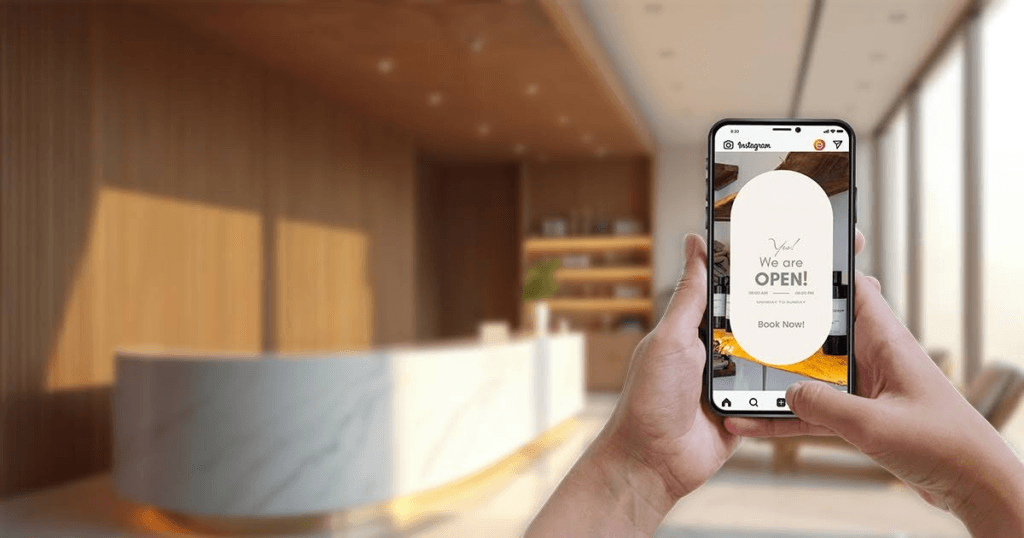
The Attention Economics Explanation Every Med Spa Owner Needs to Read Before Sending Another Recovery Text At 10:47 AM on a Tuesday, a med spa owner in Austin discovers why Instagram Stories fill open slots faster than SMS or email ever could. She posts a single Story. One opening. This afternoon. Tap to book. By 11:09 AM, the slot is filled. Twenty-two minutes. No phone calls. No email blast. No manual waitlist scramble. Just a single Story slide — branded, compliant, and connected directly to her booking system — reaching the exact audience most likely to say yes while they were already scrolling. This isn’t a lucky anecdote. It’s a pattern playing out across aesthetic practices nationwide — and the data behind it is hard to argue with. In 2026, Instagram Stories are filling open appointment slots eight times faster than SMS or email. Not marginally faster. Not slightly better under certain conditions. Eight times. The question isn’t whether Stories work for last-minute cancellation recovery. The data settled that. The question is why — and why so many practices are still defaulting to channels that convert at a fraction of the rate. Here’s the full picture. Why Don’t SMS and Email Work for Same-Day Cancellation Recovery? Let’s start with the mechanics of failure — because understanding why traditional outreach underperforms for same-day recovery is the foundation for understanding why Instagram Stories dominate. When a cancellation hits in early hours, the practice has a window of roughly two to four hours to fill that slot before it becomes unrecoverable lost revenue. Within that window, the outreach channel used determines almost everything about the outcome. Think about what actually happens when a same-day recovery text lands on a client’s phone. It arrives without context, without visual appeal, and alongside every other notification competing for attention at that moment. Most clients have learned — almost unconsciously — to filter promotional texts before they’ve even finished reading them. Of the ones who do open it, only a handful are free that afternoon, interested in the specific treatment, and motivated enough to complete a booking before the window closes. Email follows a similar pattern — and for same-day recovery it’s often even less effective. Clients check email on their own schedule, not yours. A message sent at 10 AM might not get opened until mid-afternoon, long after the slot has moved on. The result isn’t surprising. It’s just the nature of these channels. They were built for scheduled campaigns and planned outreach — not for the kind of immediate, time-sensitive response that same-day cancellation recovery actually demands. Using them for this job isn’t a failure of effort. It’s simply the wrong tool for the moment. Is There a Better Channel Than SMS for Filling Last-Minute Appointment Slots? Yes — and the performance data in 2026 points unambiguously to Instagram Stories as the highest-converting channel for same-day cancellation recovery in the aesthetic industry. The reasons are structural, behavioral, and algorithmic — and they compound each other in ways that no other single channel currently replicates. How Do Instagram Stories Work Differently From SMS for Med Spa Marketing? The performance gap between Stories and SMS isn’t just about engagement rates. It’s about four fundamentally different dynamics that make Stories structurally better suited for time-sensitive recovery outreach. Dynamic 1: Full-Screen Immersion vs. Notification Noise Instagram Stories occupy the entire phone screen. There is no competing content, no adjacent notification, no feed post fighting for attention in the same visual field. When a client taps into Stories, the content they encounter commands complete visual attention for the duration of the slide. A text notification, by contrast, competes with every other notification on the client’s lock screen — other texts, emails, app alerts, news updates. In an attention environment where the average person receives dozens of notifications per hour, a promotional SMS has to fight for relevance against everything else demanding the same real estate. Full-screen immersion isn’t a cosmetic advantage. It’s a conversion advantage — because attention is the precondition for action, and Stories generate more of it per impression than any notification-based channel. Dynamic 2: The 24-Hour Disappearing Mechanic Creates Genuine Urgency Here’s the behavioral psychology that makes Stories uniquely powerful for cancellation recovery specifically: the format’s built-in 24-hour disappearing mechanic creates authentic scarcity in a way that no other channel replicates. “Limited availability — tap to book” in an email feels like marketing language. The same message in a Story that disappears in 24 hours — or in two hours, because it’s a same-day slot — feels like a genuine time constraint. Clients who see it know, behaviorally, that the opportunity is fleeting. That knowledge drives immediate action in a way that an inbox message sitting available indefinitely simply doesn’t. For same-day cancellation recovery, this mechanic is almost perfectly aligned with the actual urgency of the situation. The slot is genuinely limited. The window is genuinely short. Stories communicate that reality through format, not just language. Dynamic 3: Visual Brand Quality Drives Trust and Conversion Med spa clients make purchasing decisions based significantly on perceived quality and trust. A well-branded, visually polished Story — using the practice’s colors, typography, and aesthetic — communicates the same premium positioning as the practice’s physical environment. It reinforces the brand relationship that makes a client confident booking a same-day appointment without an extended decision process. A text message is text. It carries no visual brand signal. It cannot communicate premium positioning, clinical credibility, or the aesthetic sensibility that med spa clients are specifically drawn to. In an industry where brand perception directly influences treatment prices and client retention, that difference in visual quality translates directly into conversion rate difference. Dynamic 4: Algorithmic Amplification Beyond the Existing Client Base SMS and email reach only the contacts already in the practice database. Stories reach followers — and through Instagram’s algorithmic distribution, Stories from accounts with strong engagement can reach beyond the existing follower base into the broader local audience of potential clients.