
Monthly Content Packages for Aesthetic Clinics: ROI You Can Measure

Advanced Analytics for Modern Clinics: Bridging the Gap Between Creative and Cash Flow. In today’s results-driven aesthetic landscape, monthly content packages for aesthetic clinics have become one of the few marketing investments that can be tracked, refined, and scaled with clarity. Visibility alone is no longer enough. Clinics are now expected to educate, reassure, and convert—often before a patient ever makes contact. This shift comes at a time when operational inefficiencies remain costly. With no-show rates ranging from 17 to 22 percent in 2026, and each missed appointment representing a loss of $200 to $500, many clinics are quietly losing between $1,200 and $7,500 every month. Over the course of a year, that can exceed $134,000 in unrealized revenue. At the same time, the U.S. med spa market continues its rapid expansion toward an estimated $23 to $26 billion, intensifying competition across every tier of the industry. Against this backdrop, content is no longer a branding exercise. It is a measurable growth mechanism—when executed with precision. Why Do Monthly Content Packages for Aesthetic Clinics Matter More in 2026? The modern aesthetic patient behaves very differently than they did even a few years ago. They are informed, selective, and highly responsive to digital cues. Before booking, they often spend time researching treatments, comparing providers, and evaluating credibility through online content. This means your content is no longer a supporting asset—it is often your first consultation. Monthly content packages create consistency in how your clinic shows up during this decision-making process. Rather than sporadic posting or reactive marketing, they establish a structured presence that guides patients from curiosity to confidence. In a saturated market, this consistency becomes a defining advantage, reinforcing authority while ensuring your brand remains visible at key moments of intent. How Do Monthly Content Packages for Aesthetic Clinics Generate Measurable ROI? One of the most common questions among clinic owners is whether content marketing can truly be measured in financial terms. The answer lies in understanding how content influences patient behavior across multiple stages. When content is strategically aligned with patient concerns, it reduces hesitation before booking. Patients arrive with a clearer understanding of treatments, which often leads to higher conversion rates. This shift is subtle but powerful—less time spent overcoming objections, and more time focused on delivering care. Content also impacts the quality of appointments. A well-informed patient is less likely to cancel, more likely to follow through, and better prepared for their treatment experience. Over time, this improves schedule efficiency and reduces revenue loss associated with no-shows. There is also a direct relationship between content and patient value. Educational blogs and social media posts that explain treatment benefits and combinations can encourage patients to explore more comprehensive plans rather than single services. This naturally increases average spend per visit. Finally, search-optimized content introduces a scalable revenue stream. When your clinic appears in search results for high-intent queries, you are attracting patients who are already motivated to act. This type of visibility tends to convert at a significantly higher rate than passive social engagement. Can Content Marketing Really Reduce No-Shows in Med Spas? While cancellations are often viewed as an operational issue, they are frequently rooted in uncertainty. Patients cancel when they feel unsure—about the treatment, the outcome, or the experience itself. Content plays a critical role in addressing this uncertainty before it escalates. When patients encounter clear, well-structured information about what to expect, how to prepare, and what results may look like, they feel more confident in their decision. This confidence translates into commitment. When combined with automated reminders—which alone can reduce no-show rates by up to 50 percent—educational content creates a more complete system. Instead of simply reminding patients of their appointment, you are reinforcing their reason for booking in the first place. What Type of Content Builds Trust for Aesthetic Clinics? Trust in aesthetics is built through clarity, tone, and restraint. Patients are not persuaded by exaggerated claims; they are reassured by transparency and professionalism. Content that performs well tends to focus on explaining treatments in a realistic and accessible way. It acknowledges timelines, highlights variability in results, and avoids absolute guarantees. Language such as “may improve,” “can enhance,” and “results can vary” not only aligns with regulatory expectations but also signals credibility. Visual content, particularly short-form video and Stories, has become especially effective in this regard. These formats allow clinics to demonstrate expertise while maintaining a sense of approachability. In 2026, this type of content is generating two to three times more engagement than static posts, but more importantly, it is influencing how patients perceive safety and authenticity. How Often Should Aesthetic Clinics Invest in Content Marketing? Frequency is often misunderstood. It is not the volume of content that drives results, but the consistency and cohesion behind it. Monthly content packages provide a structured rhythm that keeps your clinic visible without overwhelming your audience. More importantly, they ensure that each piece of content supports a broader strategy rather than existing in isolation. When content is planned in advance, it becomes easier to align messaging across blogs, social media, email campaigns, and website updates. This alignment creates a seamless experience for patients, reinforcing your brand at every touchpoint. Over time, this consistency compounds. What begins as a steady presence evolves into authority. Is Social Media Alone Enough for Patient Acquisition in 2026? Social media remains a powerful discovery tool, but it is no longer sufficient on its own. While platforms like Instagram can generate awareness and engagement, they are only one part of the patient journey. Search engines play an equally important role, particularly during the research phase. Patients who are actively searching for treatments often have higher intent and are closer to making a decision. Without SEO-driven content, clinics risk missing this critical segment of their audience. Email marketing also adds depth to the strategy, allowing clinics to maintain communication beyond initial discovery. Together, these channels create a more balanced ecosystem—one that supports both acquisition and retention. What Should Be Included in a
SEO for Aesthetic Clinics 2026: How to Rank for Botox, Fillers & More Locally

The $23 Billion Market Is Being Won Digitally. Here Is How the Best Clinics Are Claiming Their Share Modern medical spa reception area with minimalist design, wood accents, and beauty portraits on the wall. The best injector in your city might be completely invisible on Google. Not because their work is anything less than exceptional. Not because their patients are anything less than loyal. But because clinical excellence and digital authority are earned in entirely different arenas — and most aesthetic practitioners have spent a decade mastering one while the other quietly determines whether a new patient ever finds them at all. This is the uncomfortable truth at the center of local SEO for aesthetic clinics in 2026: the quality of your work inside the treatment room has almost no bearing on where Google ranks you outside of it. A practice with a less experienced injector, a more aggressive content strategy, and a meticulously maintained Google Business Profile will appear above you every single time — and the patient who would have been yours will never know the difference. The US med spa market sits at $23–$26 billion this year. The competition for the patient who has already decided they want treatment, already decided they want a premium experience, and is right now letting Google decide who deserves their trust — that competition is not clinical. It is digital. And it is being won by the practices that understand something most of their competitors do not: that Google, in 2026, is not ranking websites. It is ranking trust. This is what building that trust looks like — strategically, compliantly, and at a standard worthy of the brand you have spent years creating. Compliance note: All digital marketing for aesthetic treatments must adhere to FDA guidelines governing medical device and drug advertising, and FTC regulations requiring truthful, non-deceptive claims. Language asserting guaranteed outcomes, permanent results, or unsubstantiated superiority is non-compliant. “Individual results may vary” disclaimers are required wherever treatment outcomes are referenced. What SEO Actually Means for Aesthetic Clinics in 2026 The practices still treating SEO as a technical exercise — keyword density, meta tags, backlink counts — are optimizing for an algorithm that no longer exists. Google’s 2026 ranking infrastructure is built around one central question: does this content come from a source that genuinely knows what it’s talking about, and can patients trust it with decisions about their health and appearance? Digital SEO dashboard showing search rankings, ratings, and analytics data on a laptop screen. This is the E-E-A-T framework — Experience, Expertise, Authoritativeness, and Trustworthiness — and in the aesthetics space, Google enforces it with particular rigor. Medical aesthetics falls squarely into Google’s YMYL (Your Money or Your Life) content category, which means every page on your website is evaluated against the highest possible standard of credibility. A blog post written by a nameless content writer with no clinical attribution will not rank against content authored by a board-certified injector with verifiable credentials and a consistent publication history. Simultaneously, the rise of AI-powered search — Google’s Search Generative Experience, AI Overviews, and conversational query interpretation — has fundamentally altered how patients discover aesthetic providers. An increasing proportion of local searches now resolve without a click, answered directly in the Map Pack or a featured snippet. This makes your Google Business Profile not a supplement to your SEO strategy, but the frontline of it. And it makes the specific language of your content — whether it mirrors the conversational, nuanced way patients actually search — the difference between appearing in an AI-generated answer and being invisible to it. The clinics winning local search in 2026 are not outspending their competitors. They are out-thinking them. The Google Business Profile: Your Most Underutilized Asset If you have not treated your Google Business Profile as a living, strategic asset — updated weekly, photographed professionally, and populated with the same care as your website — you are leaving your most powerful local SEO lever largely unpulled. A fully optimized GBP in 2026 functions as a standalone brand presence within Google’s ecosystem. Category selection is not a formality; choosing “Medical Spa” as your primary category, with “Skin Care Clinic” and relevant secondary categories, directly determines which high-intent queries trigger your profile. Your service menu — each entry keyword-rich, clinically accurate, and compliantly written — is indexable content that Google reads as evidence of your expertise and local relevance. Photography matters more than most clinics realize. Practices with 100 or more high-quality images in their GBP receive more meaningful direction requests and website visits than those with a handful of stock-adjacent photos. Your space, your team, your equipment, your culture — documented with the same visual standard you apply to your patient-facing brand — signals to both Google’s algorithm and prospective patients that this is a practice that takes every detail seriously. Weekly GBP posts, proactive Q&A management, and a consistent review generation process complete the picture. On reviews specifically, Google’s local ranking algorithm weighs not just the volume and rating of your reviews, but how recently they were left and how actively you respond to them. A practice with 200 reviews and a 4.2 rating that responds thoughtfully to every piece of feedback will frequently outrank a practice with 50 reviews and a 4.9 rating that never engages. Reviews are not a reputation metric. They are a ranking signal — and a conversion tool. HIPAA reminder: Automated post-appointment review requests must not reference specific treatments or procedures. Request the review; let the patient choose what to share. Google Is Reading Your Website the Way a Nervous Patient Would Here is the reframe that changes how most aesthetic clinics think about their content: Google does not rank pages. It ranks answers — and the question it is always trying to answer, on behalf of the patient conducting the search, is “can I trust this practice with something as personal as my face?” Woman at home researching aesthetic clinic services on her smartphone. Most aesthetic
Premium Blog Content Packages: Why Med Spas Need a Monthly Blog Vault in 2026

How Consistent, Compliance-First SEO Content Is Becoming the Highest-ROI Marketing Investment for Premium Aesthetic Practices Med spa professional reviewing med spa blogs at a desk with a laptop. The most expensive mistake a med spa can make in 2026 isn’t a bad hire, a failed treatment launch, or an underperforming ad campaign. It’s invisibility. In a U.S. aesthetic medicine market valued at $23 to $26 billion — one growing fast enough to attract private equity, franchise operators, and sophisticated regional competitors in virtually every metropolitan market — the practices that win on patient acquisition aren’t necessarily the ones with the best clinical outcomes. They’re the ones that show up when a potential patient opens Google and starts asking questions. That distinction matters more than most practice owners realize. Consider the math. A woman in her late thirties decides she wants to explore preventative Botox. She doesn’t call a practice she’s never heard of. She searches. She reads. She evaluates. She forms an opinion about which practice in her market understands her concerns, speaks her language, and deserves her trust — before she ever picks up the phone. The practice whose content answered her questions gets the consultation. The practice that wasn’t there doesn’t get a second chance. This is the environment that has transformed monthly blog content packages from a marketing line item into a growth infrastructure decision. And it’s happening at exactly the moment when the stakes of getting content wrong have never been higher. FDA and FTC scrutiny on aesthetic marketing claims intensified significantly in 2026. Social media content reach is at its peak — which means the reach is extraordinary and the compliance exposure is proportional. Non-compliant content produced quickly, by generalist agencies without aesthetic industry expertise, is no longer just a brand problem. It’s a regulatory one. At Luxe Digital Collective, that question is what the Blog Vault was built to answer. Not content for content’s sake. Precision-built, compliance-reviewed, SEO-optimized content that makes premium aesthetic practices impossible to ignore in search — and impossible to fault in a regulatory review. How Do SEO Blogs Help Med Spas? This is the question that cuts through the marketing theory and gets to the operational reality — and it deserves a direct, specific answer. SEO blogs help med spas in five distinct ways that compound on each other over time: Woman reading a med spa blog about treatments trends and skincare on a laptop. They capture patients at the research stage. The patient who types “how does RF microneedling work” into Google is not yet ready to book. But they are actively researching — and the practice whose blog answers that question authoritatively is the one they will be thinking about when they are ready. Blog content captures patients at the earliest stage of the decision journey and begins building trust before the first consultation is ever booked. They establish clinical authority. A practice with thirty well-written, medically accurate, compliance-reviewed blog posts on treatment topics signals something to potential patients that a social media account alone cannot: that this is a practice staffed by people who genuinely understand what they’re doing and are willing to educate rather than simply promote. That signal converts browsers into consultations at meaningfully higher rates than promotional content alone. They build keyword ranking over time. Each blog post is an indexed page — a new opportunity for the practice’s website to appear in search results for a specific query. A practice publishing four to six SEO-optimized blogs per month is adding four to six new ranking opportunities every month. Over twelve months, that’s fifty to seventy indexed pages — a search footprint that no single-page website or social profile can replicate. They support social and email content. A well-written blog post on men’s Botox in 2026 doesn’t just rank in search — it becomes the source for three Instagram captions, a TikTok educational script, an email newsletter segment, and a Stories series. Monthly blog content packages don’t replace social content — they make it significantly easier and more consistent to produce. They protect the practice with compliant language. In a regulatory environment where FDA and FTC scrutiny on aesthetic marketing claims is intensifying in 2026, a blog written by a specialist who understands the compliance framework is a meaningfully safer piece of content than one written by a generalist, a VA, or an AI tool without aesthetic industry context. Can Med Spas Rank Quickly With SEO Blogs? This is the expectation-setting conversation that every honest SEO specialist needs to have — because the answer is nuanced, and misunderstanding it leads to abandoning a strategy before it has a chance to work. The direct answer is: not immediately, but faster than most practice owners expect when the content is done correctly, and with compounding returns that paid advertising cannot replicate. Here’s the realistic timeline. A new blog post on a well-researched, low-to-medium competition keyword — “men’s Botox in [city]” or “RF microneedling for acne scars” — published with proper technical SEO, strong on-page optimization, and genuine clinical depth, can expect to begin appearing in search results within four to eight weeks of publication. Movement toward page one typically occurs between months three and six for targeted local keywords, and between months six and twelve for more competitive broader terms. What accelerates ranking velocity in 2026: Content depth and specificity. Google rewards content that genuinely answers the searcher’s question at the level of detail they’re looking for. A 1,800-word blog on RF microneedling that addresses mechanism, candidacy, downtime, results timeline, and cost — written with clinical accuracy and compliance-reviewed language — will consistently outrank a 400-word overview page on the same topic. Consistency of publication. Google’s algorithm rewards websites that publish new, high-quality content consistently over time. A practice of publishing one or two blogs per month builds ranking momentum. A practice publishing sporadically — one post in January, then nothing until April — loses that momentum and has to rebuild it each time. Local
Med Spa Cancellation Management: The Ultimate Guide for Busy Practice Owners in 2026
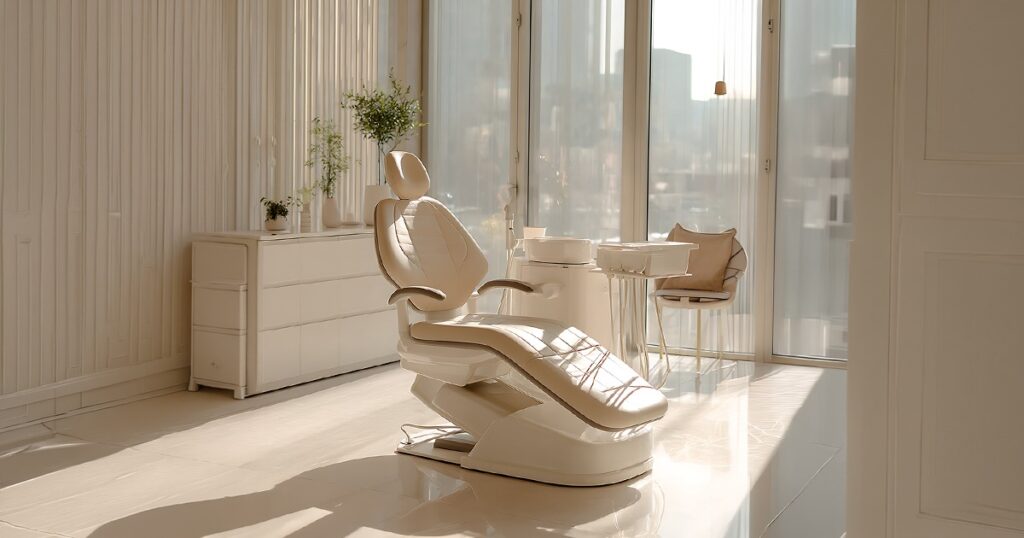
Everything You Need to Know to Stop Losing Revenue to No-Shows, Last-Minute Cancellations, and Unfilled Appointment Slots A woman in a silk blouse smiles at a med spa receptionist across a marble counter. Cancellation management for med spas is one of those operational problems that most owners know they have but few have solved systematically. You didn’t open a med spa to spend your mornings chasing down cancellations. But here you are — managing a full clinical schedule, leading a team, maintaining the kind of client experience that justifies premium pricing, and somewhere in the middle of all of that, watching appointment slots disappear from a schedule that was fully booked 24 hours ago. It’s not a glamorous problem. But for practice owners losing around $7,000 to $8,000 every month to unfilled slots — and more than $134,000 annually in many mid-sized practices — med spa cancellation management may be the highest-ROI operational challenge you can solve in 2026. This is the guide that covers all of it. The data behind the problem, the policies that actually work, the technology that’s changed the recovery equation, and the systematic approach that separates practices absorbing cancellation losses from practices converting them into revenue. The “Empty Chair” Syndrome: Measuring the 2026 Revenue Leak In the high-demand landscape of 2026, time is the only inventory you can’t restock. When a treatment room sits dark because of a late cancellation, it isn’t just a scheduling glitch—it’s a disruption of your clinic’s biological rhythm. Current industry data shows that no-show and last-minute cancellation rates are holding steady between 17% and 22%. If you look at your calendar right now, that represents nearly one out of every five patients failing to walk through your door. While a single missed connection might feel like a minor inconvenience, the math tells a much more aggressive story. Depending on the complexity of the service, the immediate revenue impact per appointment can reach as high as $500. There is a massive operational gulf between an unfilled 30-minute express service and a two-hour advanced laser resurfacing slot; however, both represent a total loss of fixed overhead and specialist time. An empty, modern med spa treatment room with a cream-colored medical chair, floor-to-ceiling windows, and minimalist decor. For the average mid-sized practice owner, these “evaporated” slots aggregate into a monthly revenue drain of $4,000 to $8,000. When you zoom out to the fiscal year, most clinics in the $1M to $3M bracket are absorbing a staggering $134,000+ in annual losses. In 2026, the difference between a plateauing practice and a thriving one often comes down to how effectively the owner “plugs” this six-figure leak. What Causes Med Spa Cancellations — And Does It Matter? Understanding why clients cancel helps calibrate the right response — because not all cancellations have the same cause, and not all causes respond to the same solutions. Schedule conflicts and life changes account for the majority of cancellations across most practices. These are genuinely unavoidable — work demands, childcare, illness, travel. No policy eliminates them. The question is whether a system exists to recover the revenue from the slot they leave behind. Forgotten appointments are the category most directly addressed by reminder systems. A client who simply forgot they had a 2 PM appointment on Thursday will often keep it if reminded Tuesday morning. Automated reminder sequences — properly implemented — reduce no-show rates by 40 to 50 percent. This is well-established, and every practice should have them running. Anxiety and avoidance represent a smaller but meaningful category — clients who booked in a moment of motivation and talked themselves out of it by appointment day. This pattern often signals a client relationship or expectation-setting issue that reminder systems alone don’t solve. Financial hesitation — clients who experience sticker shock between booking and appointment day — is partly addressable through deposit requirements that create financial commitment at the point of booking. Habitual cancellers are the highest-friction segment — clients with a pattern of late cancellations or no-shows across multiple appointments. Every practice has a few. The question is whether the policy framework creates enough accountability to change the behavior or make the relationship economically unviable. What this breakdown makes clear: some cancellations can be prevented. Many cannot. A complete med spa cancellation management strategy addresses both — prevention where possible, revenue recovery where prevention fails. Does Your Cancellation Policy Actually Protect Your Revenue? A cancellation policy is the foundation of any serious cancellation management approach — but most policies in the aesthetic industry are either too vague to enforce or too aggressive to survive client relationship realities. Here’s what an effective med spa cancellation policy actually needs to include: A clear cancellation window. Most providers in the aesthetic space use a 24 to 48 hour cancellation window — meaning cancellations made less than 24 or 48 hours before the appointment trigger a fee. Longer windows are harder to enforce without client friction; shorter windows don’t provide enough operational runway for recovery. A deposit or card-on-file requirement. Policies without financial teeth don’t change behavior. Requiring a deposit at booking — typically 25 to 50 percent of the treatment value — creates the financial commitment that separates genuine bookings from speculative ones. Card-on-file requirements achieve similar accountability without requiring upfront payment. Either approach meaningfully reduces no-show rates compared to policies with no financial component. A clearly communicated fee structure. Vague language like “a fee may apply” is functionally unenforceable. Specific language — “cancellations within 24 hours of your appointment will be charged 50 percent of the scheduled service value” — sets clear expectations and creates the contractual basis for enforcement. Documented client acknowledgment. Clients should explicitly acknowledge the cancellation policy at the time of booking — through a checkbox in online booking, a signed intake form, or a confirmation message that requires active response. Documentation protects the practice if a dispute arises. A human exception process. The best policies build in a mechanism for genuine emergencies — first-time occurrences, documented
2026 Med Spa Trends: Why Stories Outperform Traditional Follow-Ups for Revenue

The Smartest Med Spa Owners Are Ditching Mass Texts — and Filling Slots With Stories Instead Smiling woman holding a smartphone, looking at her phone screen. In a 2025 report by CNBC, it was stated that Instagram has 3 billion active users. We can imagine that the number has only grown since then. But what does that mean for med spas? Yeah, you guessed it — it is the best place to showcase, advertise, and sell your treatments. That is not all. One of the most popular 2026 med spa trends is using stories for follow-ups and turning no-shows into spots filled, sometimes within minutes. Stories are quickly outperforming traditional follow-up methods and reminders across the board. So why are Stories doing so well? Let us find out. Are Instagram Stories Good for Business? Short answer: absolutely. Long answer: they are arguably the single most underutilized revenue tool sitting right inside your phone — and what is wild is that most med spa owners have never once considered tapping into it, at least, not in the best way. Stories generate two to three times the engagement of standard feed posts. They sit at the very top of the app, above the algorithm-controlled feed, above ads, above everything. The moment a follower opens Instagram, your story is the first thing they see — full screen, no competition, no distractions. For a med spa trying to fill a last-minute cancellation or promote a same-day opening, that kind of front-row visibility is worth more than any email campaign you could send. In 2026, with the US med spa market valued at $23–$26 billion and competition growing in virtually every market, the businesses winning the attention game are the ones showing up consistently where their clients already are. And their clients are on Instagram — three billion of them, and counting. But Stories are not just good for visibility. They are good for trust. Every Story you post — whether it is a behind-the-scenes clip, a treatment result, or a same-day slot opening — reminds your followers that your spa is active, professional, and worth booking. That kind of consistent presence builds something no SMS blast can replicate: a genuine relationship between your brand and your audience. Why Do People Post Stories Instead of Feed Posts? This is a question worth answering honestly, because the psychology behind it is exactly what makes Stories so powerful for med spa marketing. Smartphone screen showing a client receiving a facial treatment with a device at a med spa. Feed posts are permanent. They get scrutinized, over-edited, and second-guessed. Business owners agonize over captions, aesthetics, and whether the grid looks cohesive. The result? Most businesses post to their feed once or twice a week — if that — because the pressure to make it perfect is paralysing. Stories are different. They disappear in 24 hours. That built-in expiry date removes the pressure entirely and creates something far more valuable in return: authenticity. Followers know a Story is raw, real, and in the moment. When your spa posts a story saying, “we just had a 3 pm cancellation — first to book, gets it,” that feels like an insider tip for your followers from a brand they trust. It does not feel like an ad. It feels like a text from a friend who happens to run a med spa. And here is the business insight hiding inside that psychology: urgency plus authenticity equals conversion. When a follower sees a Story about an open slot at their favourite spa, they are not scrolling past it the way they might ignore a promotional email in a crowded inbox. They are tapping the link. They are booking. Right now, before the Story disappears. That is the magic that no traditional follow-up method — not SMS, not email, not a waitlist notification — has ever been able to replicate. Stories Are One of the Most Important Ways to Engage Your Followers — Here Is Why Engagement is a word that gets thrown around a lot in marketing, but for med spa owners, it has a very specific and very practical meaning: engaged followers book appointments. Disengaged followers do not. It really is that simple. Stories drive engagement in a way that feed posts cannot, because they invite participation. Polls, questions, countdowns, and reaction sliders — all of these are native story features that turn passive scrollers into active participants. Ask your followers which treatment they want to try next. Run a poll on morning versus evening appointments. Post a countdown to a limited-time opening. Every interaction builds a micro-habit in your followers: they expect to hear from you, they look forward to your content, and when you share an available slot, they are already primed to respond. For med spas specifically, this kind of ongoing engagement is the difference between a cold audience that ignores your recovery posts and a warm audience that books within minutes of seeing them. SpotFill clients who post consistently to stories report significantly faster slot recovery — not just because stories are a better channel, but because their audience is already engaged and ready to act when the post goes live. In 2026, med spas that rely solely on email and SMS to communicate with clients are falling behind. Stories are not a trend — they are the new baseline for how aesthetic businesses stay connected with their communities. How Many Instagram Stories Per Day Should a Med Spa Post? This question stops a lot of med spa owners from getting started, because they either worry about posting too much or they use the uncertainty as a reason not to post at all. Here is the honest answer. For a med spa, the sweet spot is between two and five Stories per day. Enough to stay visible and top of mind, not so many that followers start skipping through your content without engaging. Think of it like showing up to a party — you want to